

odd-toed ungulate
- noun
- /ˈɑdˌtoʊd ˈʌŋɡjʊlɪt/
- Specialized
- Unlike cows and deer, which have two or four toes, an odd-toed ungulate typically has one or three toes on each foot.
Examples
-
Rhinoceroses, tapirs, and zebras all belong to the group known as odd-toed ungulates.
-
Horses are an example of an odd-toed ungulate.
-
The horse is a classic example of an odd-toed ungulate in the animal kingdom.
-
The odd-toed ungulate is a unique group of mammals.
-
Rhinoceroses, tapirs, and zebras all belong to the group known as odd-toed ungulates.
-
The horse is a classic example of an odd-toed ungulate in the animal kingdom.
-
Unlike cows and deer, which have two or four toes, an odd-toed ungulate typically has one or three toes on each foot.
Synonyms

A group of hoofed mammals with an odd number of toes like horses, rhinos, and tapirs
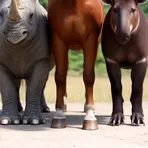
A mammal with hooves and an odd number of toes, like a horse or rhino
Antonyms

- Specialized
A mammal with hooves that walks on an even number of toes, like cows or deer
Surface Forms
Morphology
odd-toed + ungulate
The phrase is directly compositional: 'odd-toed' can be parsed as 'having an odd number of toes' and 'ungulate' means a hoofed mammal, so together they mean a hoofed mammal with an odd number of toes. This follows standard English compounding patterns and is cross-linguistically transparent, so a B1 learner who knows the constituent words should be able to infer the meaning.
Etymology
Odd-toed ungulate names animals with a hoof and an odd number of toes. odd-toed literally means 'one or three toes' and ungulate means 'hoofed animal', so horses, rhinos, and tapirs are called odd-toed ungulates.

