
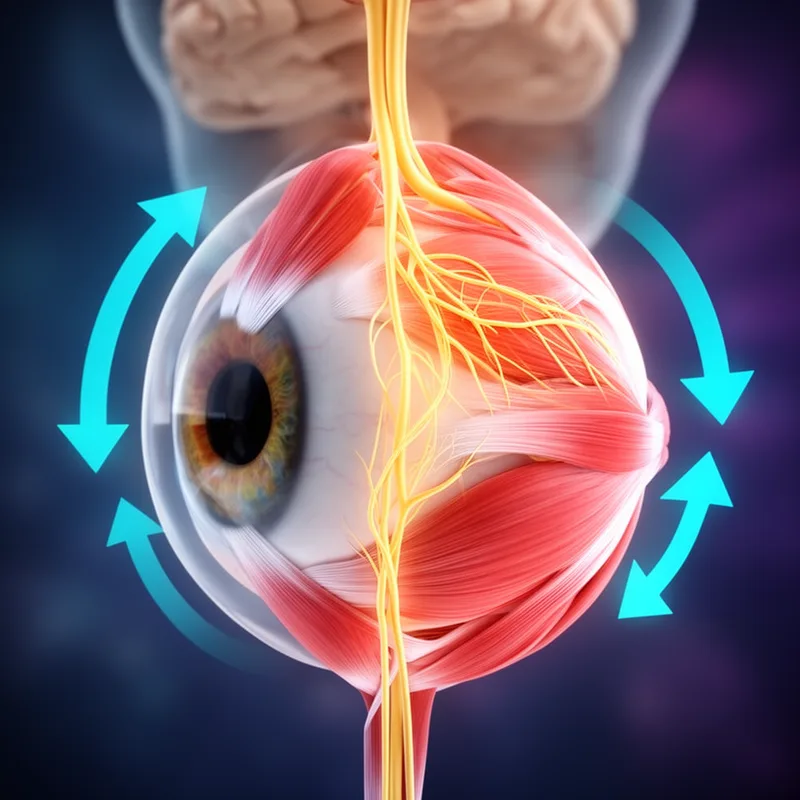
oculomotor nerve
- noun
- /ˌɑk.jə.loʊˈmoʊ.tər nɜrv/
- Specialized
- The doctor tested the patient's oculomotor nerve function during the neurological exam.
Examples
-
Damage to the oculomotor nerve can result in difficulty moving the eye upward or inward.
-
The oculomotor nerve originates in the midbrain and controls most of the eye's movements.
-
The oculomotor nerve controls eye movement.
-
Damage to the oculomotor nerve can cause double vision.
-
The oculomotor nerve controls the movements of the eyeball and helps in adjusting the lens for focus.
-
Damage to the oculomotor nerve can result in double vision and difficulty moving the eye.
-
Surgeons carefully monitor the oculomotor nerve during brain surgery to avoid complications with eye movement.
Synonyms
 1
9.9
1
9.9

A nerve that controls most eye movements and changes pupil size
A nerve that moves most eye muscles and controls pupil size
A nerve that moves most eye muscles and controls the eyelid and pupil
Surface Forms
Morphology
The term is fully compositional: 'oculomotor' denotes eye movement/control and 'nerve' denotes a bundle transmitting impulses, so together they literally mean the nerve that controls eye muscles. This follows standard biomedical naming patterns (e.g. nervio oculomotor, nerf oculomoteur) and would be understandable to a B1 learner who already knows both constituents.
Etymology
Oculomotor nerve comes from old words meaning 'eye mover': oculo means 'eye' and motor means 'mover'. That's why the name refers to the nerve that sends signals to most of the eye muscles and so controls the eye's movements.