
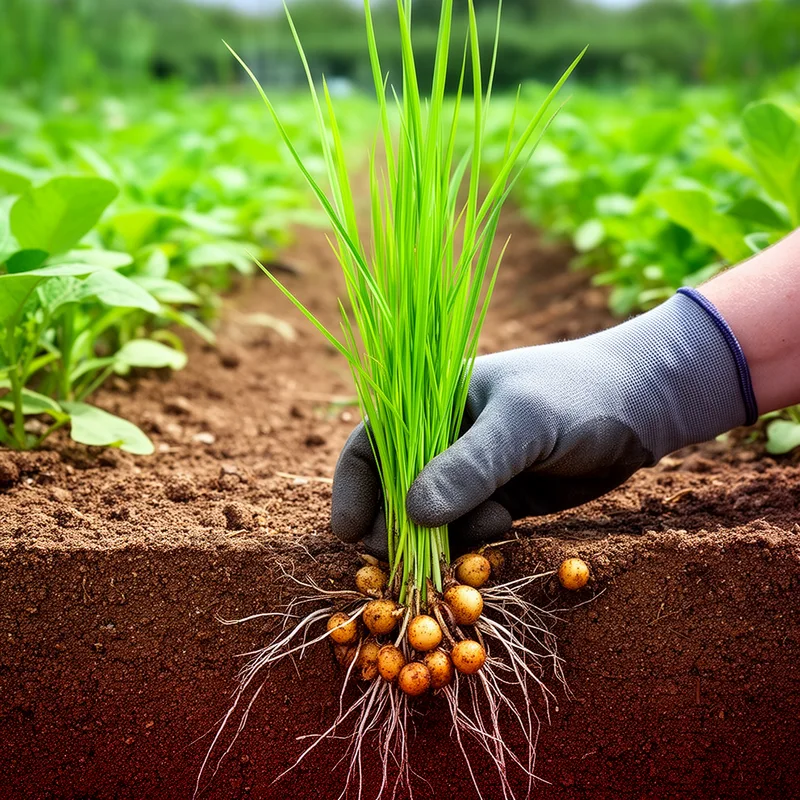
nut sedge
- noun
- In some cultures, the tubers of nut sedge are harvested and eaten as a delicacy.
Examples
-
The farmer struggled to control the nut sedge invading his vegetable garden.
-
The nut sedge grows abundantly in wetlands.
-
The rapid spread of nut sedge makes it a troublesome weed in many fields.
-
Farmers appreciate nut sedge for its nutritious tubers.
-
In some cultures, the tubers of nut sedge are harvested and eaten as a delicacy.
-
Farmers appreciate nut sedge for its nutritious tubers, which provide essential food for their families.
-
The nut sedge grows abundantly in wetlands, thriving in moist soil and providing food for wildlife.
Synonyms


 1
9.9
1
9.9
A plant like grass with small edible nutlike parts under the ground

A grass-like plant with small edible nutlike roots often seen as a weed
A grasslike plant with small edible parts under the ground that often grows as a weed

A common weed that has small edible tubers like tiny potatoes underground

A small European plant with edible tubers that look like nuts

A grass-like plant that makes small sweet edible tubers called tiger nuts
A small edible root like a tiny nut that people eat or use in food

A small plant with edible parts like nuts that grow under the ground

A plant with small edible tubers you can dig up and eat
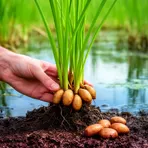
A plant that grows near water and has nut-like parts you can eat
Surface Forms
Morphology
The compound is compositionally built from 'nut' modifying 'sedge', so a learner who knows both words can infer it refers to a sedge that has nutlike/edible tubers or nut-like parts. This follows common noun-noun compounding patterns (modifier specifying a property of the head noun) and is therefore directly understandable to B1 learners who know the constituents.
Etymology
The noun nut sedge comes from the plant's small, nut-like roots called 'tubers', and sedge is a grass-like plant, so the tiny round roots look like little nuts. That's why the name fits a plant people sometimes eat for its 'edible tubers' and why it is also often called a 'weed' when it spreads into gardens.