
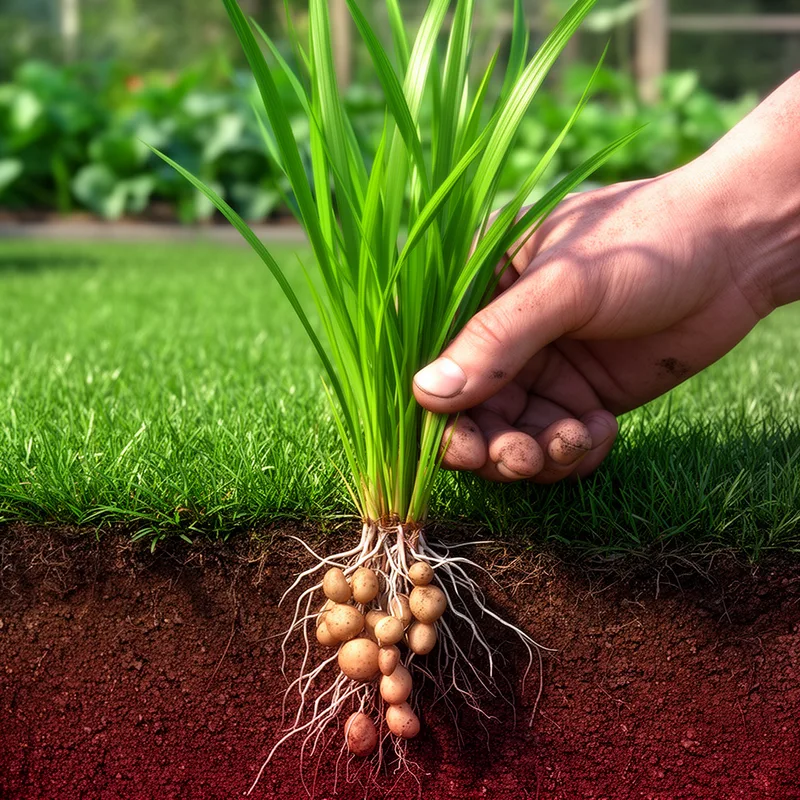
nut grass
- noun
- /nʌt ɡræs/
- The gardener struggled to remove nut grass from the vegetable patch every spring.
Examples
-
Nut grass quickly spreads in lawns and is notoriously difficult to control.
-
Some traditional dishes in Asia use the tubers of nut grass as an ingredient.
-
The garden was overrun with nut grass.
-
Farmers often struggle with nut grasses in their fields.
-
The gardener struggled to remove the persistent nut grass that kept invading her flower beds.
-
After several attempts to eliminate nut grass, he realized it was a stubborn weed in his lawn.
-
Many homeowners consider nut grass a nuisance due to its rapid growth and tough roots.
Synonyms


 1
9.9
1
9.9
A plant like grass with small edible nutlike parts under the ground

A grass-like plant with small edible nutlike roots often seen as a weed
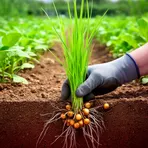
A grass-like plant with small round edible underground tubers that often grows as a weed

A common weed that has small edible tubers like tiny potatoes underground

A plant with small edible tubers you can dig up and eat
A plant that grows near water and has nut-like parts you can eat
Surface Forms
Morphology
The compound 'nut grass' is directly interpretable as a type of grass associated with nutlike parts: combining 'nut' (nutlike/tuber) and 'grass' (grasslike plant) yields the intended meaning. While botanical specifics (that it is a sedge rather than a true grass) may be unfamiliar, a B1 learner who knows both constituents can reasonably infer it denotes a grass-like plant with nutlike tubers, so the form is compositional and transparent.
Etymology
The name nut grass comes from the plant's small, nut-like parts that grow under the ground. The plant looks like grass above the soil but hides little nuts below, and because those parts spread easily and are hard to remove the plant became known as a common 'weed'.