

nonmaterial


 1
7.7
- adjective
- /ˌnɒn.məˈtɪr.i.əl/
- Professional interest in spirituality and nonmaterial understandings of reality is growing (Cnaan, Boddie, & Danzig, 2005; Hodge, 2006).
- nonmaterial entity
- nonmaterial form
Examples
-
In drawing this conclusion, I do not intend to downplay the material and other nonmaterial benefits derived from placing homeless individuals with psychiatric disorders in permanent and independent housing.
Academic text (2002) -
Indeed, aboriginal people have successfully incorporated a variety of new material and nonmaterial entities into their ways of life.
Academic text (2001) -
Such objectivity includes the nonmaterial aspects of human creativity, including society itself.
Academic text (2002) -
Essentially, it is an experience of interaction with what is felt to be an intelligent, nonmaterial entity that is separate from the ego or self.
Academic text (1990) -
Spirituality is the conviction that nonmaterial forces influence people's everyday lives.
Academic text (2003) -
Founded in 1954 by science fiction writer L. Ron Hubbard, the Church of Scientology advances the belief that humans are naturally good, nonmaterial spiritual beings.
Academic text (2004) -
For this reason, trinitarian faith requires a nonmaterial trinitarian "sight," and since humanity is made in God's image, it is biblically rational to look for such an image in the human person.
Academic text (2007) -
As Ekeh discusses, the duties, obligations, and nonmaterial rewards for citizen participation in the primordial public are forms of civic republican citizenship.
Academic text (1998) -
As we know from many studies, Native peoples categorize their material and nonmaterial culture differently from the standard anthropological and historical museum categories, which utilize a middle-class European American framework.
Academic text (2010) -
Many people find joy in nonmaterial pursuits, such as art and friendship.
Synonyms
 22
7.2
Something that cannot be touched and is often a feeling or quality
 9
6.8
Not solid or strong and not filling
 4
7.4
Not physical and cannot be touched
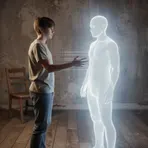 2
9.9
Not having a physical body or shape that you can touch
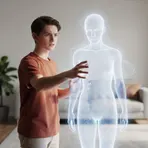 1
7.0
Not having a body you can touch or see
 1
7.3
Not solid or real and having little value
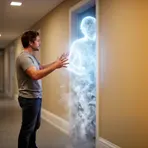 1
9.8
Without a physical body or shape
 1
9.9
A thing that has no physical form and cannot be touched
 1
9.9
Not having a physical body, like a ghost
 1
9.1
About the mind or spirit rather than the body
 1
9.9
Not having a physical form like a ghost or spirit
Antonyms

Surface Forms
Morphology
Etymology
The word nonmaterial is made of non- meaning 'not' and material meaning 'physical stuff' or 'matter'. So, nonmaterial describes things you cannot touch, like ideas, feelings, or spirits.