

noncorporeal


 1
9.8
1
9.8
- adjective
- /nɒnˈkɔːrpəˌrɪəl/
- During the séance, the medium claimed to connect with a noncorporeal spirit from the other side.
- noncorporeal state
Examples
-
Thus, the thrilling yet uncanny creation of noncorporeal voices, occurring via the mnemonic devices of impersonal little poems and recording technology, again engenders forgetful recollection.
Academic text (2017) -
I had no need of atmosphere and was, by human definition, noncorporeal.
Fiction book (2001) -
Vanishing Point: A teleporter incident causes Hoshi to turn invisible and noncorporeal.
Blog text (10) -
The mind, it turns out, is not the elusive, fuzzy, noncorporeal, and transcendent entity imagined for thousands of years but, rather, a pure property of brain activity.
Academic text (1997) -
Consequently, the early oral quest to partake in the totality of the good-mother-like Holy Presence is more of a longing to merge with the noncorporeal grace of nonbeing.
Academic text (1990) -
Ghosts are often depicted as noncorporeal entities lacking a physical form.
-
Many believe that after death, the soul becomes a noncorporeal being, existing beyond the physical realm.
Synonyms
 4
7.4
4
7.4
Not physical and cannot be touched
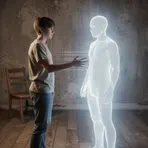 2
9.9
2
9.9
Not having a physical body or shape that you can touch
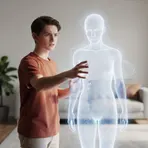 1
7.0
1
7.0
Not having a body you can touch or see
 1
7.7
1
7.7
Has no physical form and is about ideas or feelings

Not having a physical form like a ghost or spirit

Not having a physical body, like a ghost
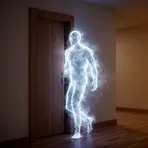
A being that has no physical body like a ghost

About the mind or spirit rather than the body
Antonyms


Surface Forms
Morphology
Etymology
Noncorporeal starts with non- meaning 'not' and ends with corporeal, which comes from a root that means 'body' and is the same root you see in corpse. So noncorporeal means 'not having a physical body', like a ghost or spirit.