

nonliterary


 1
5.4
1
5.4
- adjective
- /nɒnˈlɪtərɪ/
- The simple present tense, because of its perfectivity, is adapted in nonliterary contexts such as sports commentaries for the purposes of narration.
- literary or nonliterary
- nonliterary texts
- nonliterary language
Examples
-
In a meeting, the manager presented the project's details in a nonliterary manner, focusing solely on facts and data.
-
The utility of nonliterary language and mathematics is, of course, well established, but Langer argues that the subjective, feeling aspects of experiences do not "take the impress of discursive form" very well.
Academic text (1995) -
" It discusses both novels and nonliterary texts.
Academic text (1991) -
Moreover, this study does not incorporate any nonliterary evidence, for example, of an archaeological and therefore more highly localized nature, to any significant extent.
Academic text (2007) -
I have just glanced at the desk in my business, nonliterary office (I separate the functional from the aesthetic).
Blog text (2) -
Though rarely mentioned in the CCSS documents, the term is presently being used to describe a method of reading that can be applied to complex texts in both literary and nonliterary genres.
Academic text (2013) -
Conversely, there are texts, such as advertisements, which are traditionally considered nonliterary, yet which, to a large extent, fulfill the usual criteria of fictionality.
Academic text (2004) -
If I were credible enough to have my own blog, here are five nonliterary but literate blogs I read regularly that would have a place on my blogroll:
Blog text (32) -
The article was straightforward and nonliterary, providing clear instructions without any embellishments or stylistic flourishes.
-
Many newspaper articles are nonliterary, aimed at delivering information quickly and efficiently rather than entertaining the reader.
Synonyms

Plain, direct writing that is not showy
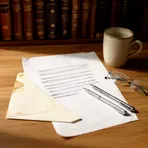
Does not try to be artistic and often looks like a casual letter
Antonyms

How Literary

Surface Forms
Morphology
Etymology
Nonliterary is made of the part non- meaning 'not' and literary, which comes from literature meaning 'books and writing' and is related to the familiar word letter. So nonliterary describes language or style that is 'not' about books or art but plain, factual, and easy to read.