
nonionizing


 1
7.2
Not strong enough to remove electrons from atoms or molecules
- adjective
- /ˌnɒnˈaɪənaɪzɪŋ/
- Specialized
:
no ionizante
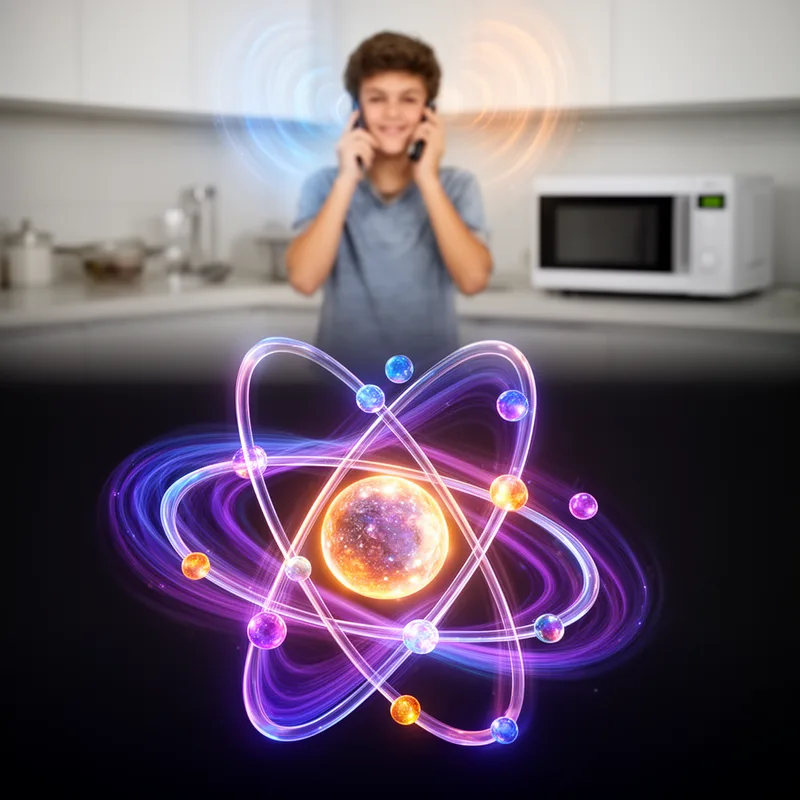
- Nonionizing radiation, such as microwaves, does not have enough energy to displace electrons from atoms.
Examples
-
Many everyday technologies, like radio and television, use nonionizing radiation to transmit signals.
-
Nonionizing electromagnetic fields are commonly found near power lines and are considered safe for human exposure.
-
The absence of risk is related to the time spent working in front of the machine, but the highest nonionizing radiation is from the back and top of the unit (Goldhaber, Polen, & Hiatt, 1988).
Academic text (2010)
How Ionizing
ionizing radiation
4
6.5
- Specialized
4
6.5

nonionizing
1
7.2
- Specialized
1
7.2
Surface Forms
nonionizing positive
Morphology
Etymology
Nonionizing is built from non- meaning 'not' and ionize meaning 'to make an ion', which is an atom or molecule with an extra or missing electron. So nonionizing describes radiation that is 'not strong enough' to remove electrons from atoms or molecules and therefore does not create ions.