
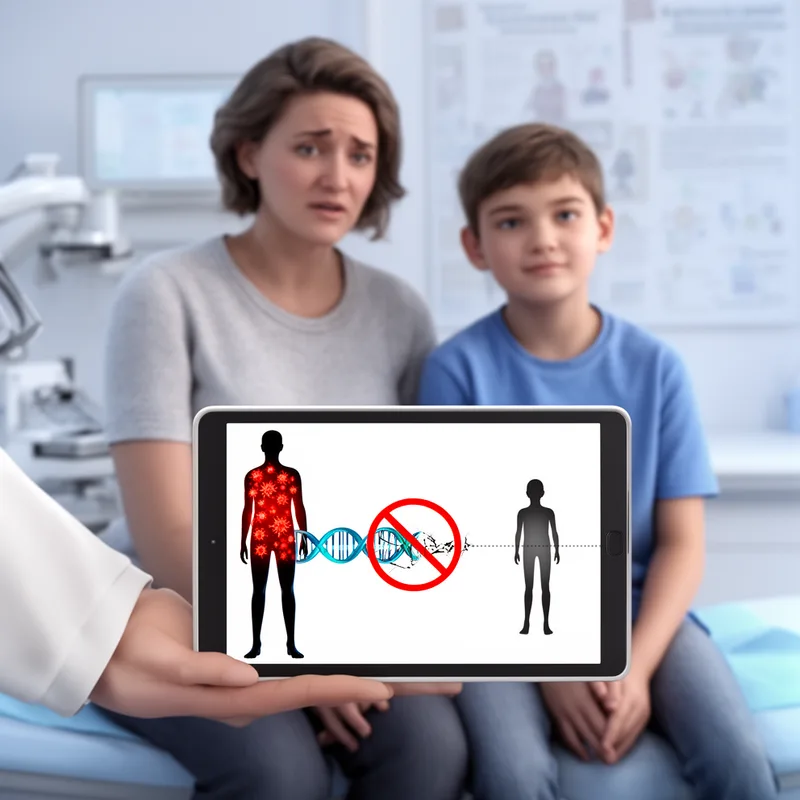
nonhereditary
- adjective
- /ˌnɒn.həˈrɛd.ɪˌtɛr.i/
- Specialized
- On the other hand, acquired ichthyosis is a nonhereditary condition associated with internal disease and usually appears for the first time in adulthood.
Examples
-
Acquired ichthyosis is a nonhereditary condition that often appears in adulthood due to internal disease.
-
However, this is not a feature dependent upon or to be associated with language type; there are hereditary features and claims in other areas, and there have been several accounts of nonhereditary big men among Austronesian speakers.
Academic text (1990) -
Nonhereditary princes—new founders or conquerors—can depend only on themselves.
Academic text (1999) -
The results of several investigations have suggested that permanent SNHL develops in as many as 54% of patients with nonhereditary chronic renal failure; the vast majority of affected patients had been treated with hemodialysis.
Academic text (2006) -
Researchers found mutations associated with nonhereditary colon cancer in several patients without a family history.
-
Many people believe that high blood pressure is purely genetic, but lifestyle factors can lead to nonhereditary hypertension.
Synonyms


 1
6.5
1
6.5
Not caused by genes but by things like the environment or experience

A disease or trait that parents cannot pass to their children through genes

Not able to be passed down from parents to children
A trait in offspring that is different from both parents
Does not come from parents
Antonyms


How Heritable
- Specialized
22
5.1

- Specialized
925
3.8
- Specialized
- Specialized
Surface Forms
Morphology
nonhereditary = hereditary (transparent) = non + hereditary
The productive negative prefix 'non-' is directly attached to the adjective 'hereditary', yielding the straightforward meaning 'not hereditary'.
Etymology
Nonhereditary splits into non- meaning 'not' and hereditary, which comes from a root meaning 'heir' or 'to inherit' and is the same idea behind the common word inherit. So nonhereditary means 'not passed from parents to children'.