
nomadism
- noun
- /ˈnoʊməˌdɪzəm/
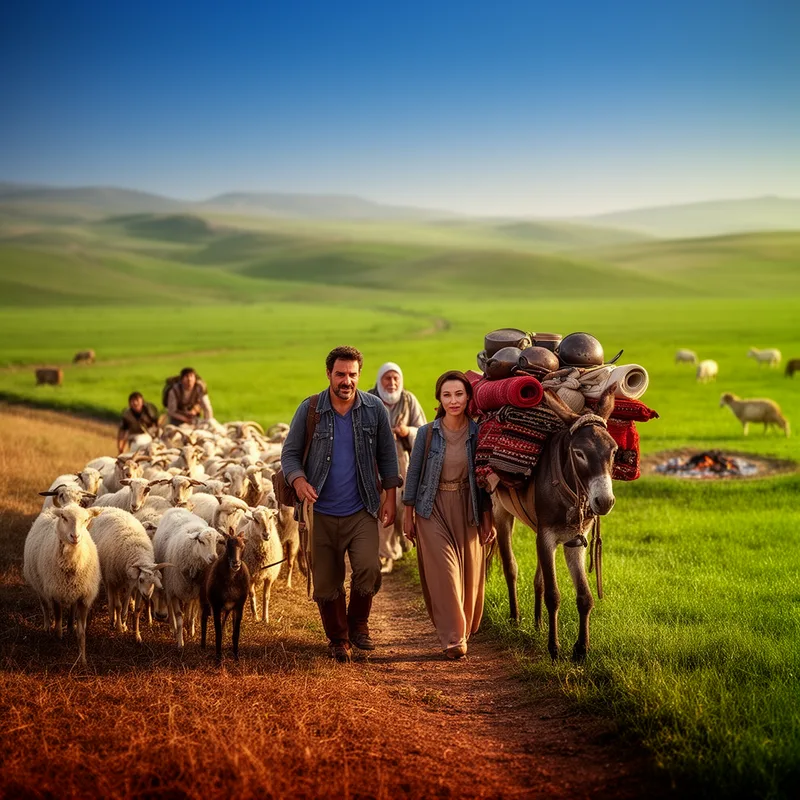
- The documentary explored the challenges faced by groups practicing nomadism, as they relocate regularly to find food and water.
- pastoral nomadism
Examples
-
When occupying British officials deposed Reza Shah in 1941, many of the tribesmen reverted to nomadism.
Academic text (2008) -
Nomadism and owning large livestock, namely camels, are associated with independence.
Academic text (1992) -
The nomadism of Sawiyano is compatible with their land use system.
Academic text (1992) -
Instead, the series affirms the artist's modern nomadism; he, his sign, and his territory are itinerant but no less grounded.
Academic text (2011) -
In these processes, nomadism and sedentism have become more than subsistence strategies or commercial transactions.
Academic text (1992) -
While farming follows a rigid schedule of planting and exploitation, nomadism requires constant decisions and initiative, which instill willfulness and independence.
Academic text (2008) -
Despite their economic independence and nomadism, most Tuareg women until recently tended to travel less widely than Tuareg men, who raided and traded over longer distances.
Academic text (2005) -
Many communities in Mongolia still practice nomadism, moving their herds across the steppes in search of better grazing land.
-
In regions where resources are scarce, nomadism allows people to adapt to their environment by following seasonal patterns.
Synonyms

Living by traveling and not staying long in one place
Moving from place to place rather than living in one place

To travel from place to place and live without a fixed home

Moving from place to place without a home or clear purpose
Antonyms


How Nomadic


Surface Forms
Morphology
Etymology
The word nomadism comes from the Greek word nomadēs, from nomos meaning 'pasture' or 'grazing land'. A nomad was someone who moved to find pasture for animals. So, nomadism is the way of life of moving from place to place to find food, water, or land for animals, rather than living in one permanent home.