

vagabondage
- noun
- /ˌvæɡəˈbɒndɪdʒ/
- Archaic
- The book tells the story of a young man's vagabondage as he journeys across the country in search of purpose.
Examples
-
Elaine Marks perceives Renee's vagabondage as a professional necessity, stating that she is "forced to wander ... partaking of the advantages of vagabondage without having to face any of its practical difficulties."
Academic text (1994) -
Montaigne had made a point of hiring beggar children to work in his kitchen, but found they often preferred a life of vagabondage.
Academic text (1991) -
This allegorical connection between the plague and vagabondage was prevalent in early modern England.
Academic text (2017) -
And peasants were being turned off their land and being reduced to vagabondage or brigandage.
-
For a woman such as Emma, vagabondage is but a whirlwind of purposeless activity.
Academic text (1994) -
The narrator establishes early on the fundamental link between vagabondage and freedom, a link that is basically positive, as it will remain throughout the novel, and yet not without ambiguity.
Academic text (1994) -
Unlike Renee Nere, as we shall see, Emma becomes increasingly immobile and dependent upon men to give direction to her vagabondage.
Academic text (1994) -
Generally speaking, then, Renee's own sense of vagabondage becomes more clear-cut and positive as the novel unfolds, in contrast to that of Emma Bovary.
Academic text (1994) -
After losing her job, she lived a life of vagabondage, traveling from city to city without a permanent home.
-
His vagabondage around Europe allowed him to meet new cultures and experiences he never expected.
Synonyms
 6
3.4
6
3.4

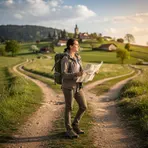
Traveling from place to place without a fixed place to go
 5
8.7
5
8.7
Moving from place to place without a home or steady work
 2
5.8
2
5.8
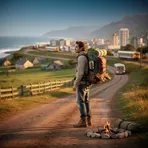
A period of traveling from place to place without a fixed home
 1
9.9
1
9.9
A long trip visiting many different places
 1
8.1
1
8.1
A feeling of not having a permanent home or place to belong

Living by traveling and not staying long in one place
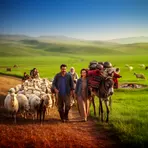
A way of life where people move seasonally to find food or grazing land
Antonyms


How Rootless

Surface Forms
Morphology
Etymology
The word vagabondage comes from the word vagabond, which comes from the old Latin vagari meaning 'to wander'. It is related to the English word vagrant, so picture someone moving from place to place with no fixed home. That's why vagabondage means the act or state of wandering without a permanent home.