
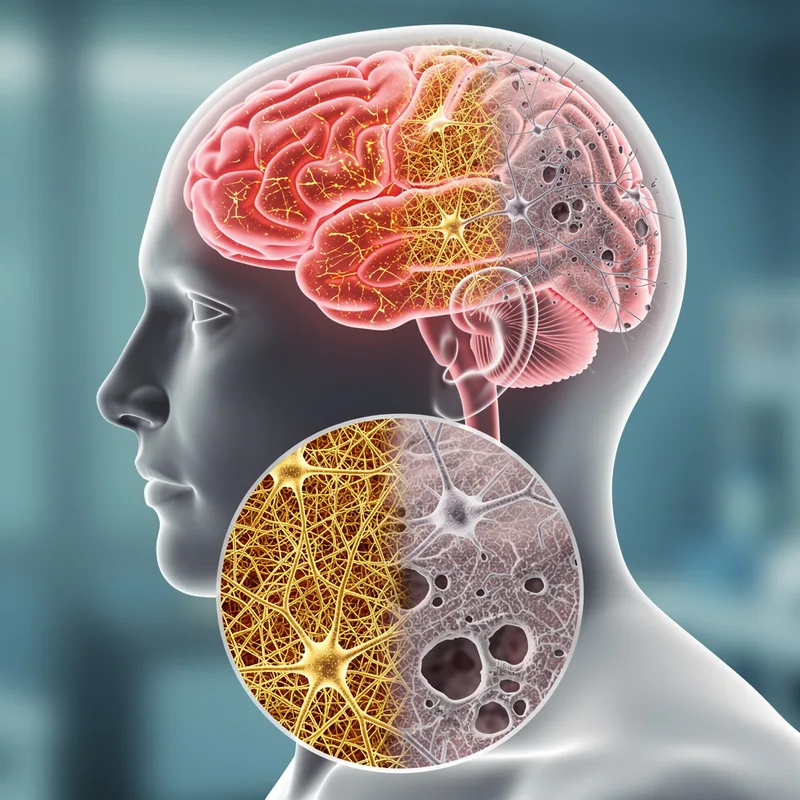
neurodegeneration
 1
8.5
1
8.5

- noun
- /ˌnjʊəroʊˌdɛdʒəˈnɛrɛɪʃən/
- Specialized
- Folks, there are millions of people that are suffering from age-related neurodegeneration, but we all know that you don't have to be older to suffer.
- exacerbate neurodegeneration
- neurodegeneration model
- cleavage in neurodegeneration
Loading YouTube…
Watch on YouTubeFolks, there are millions of people that are suffering from age-related neurodegeneration, but we all know that you don't have to be older to suffer.
- Folks, there are millions of people that are suffering from age-related neurodegeneration, but we all know that you don't have to be older to suffer.
- If you look at Alzheimer's, exercise and nutrition, I mean, you're like, really for my brain, neurodegeneration, absolutely.
Examples
-
Symptoms of neurodegeneration often include memory loss, confusion, and difficulties with movement.
-
Her MRI shows early signs of neurodegeneration.
-
Really, there's nothing to suggest any neurodegeneration.
-
Recent studies have linked neurodegeneration to a decline in cognitive function among elderly patients.
-
The doctor explained that neurodegeneration can lead to serious conditions such as Alzheimer's disease.
Synonyms
The breakdown of nerve tissue caused by disease, injury, or toxins
How Serious
- Specialized
1
8.5

- Specialized
3
3.9
- Specialized
1
4.1
- Specialized
1
7.7
21
3.2
Surface Forms
Morphology
neurodegeneration = degeneration (semi-transparent) = neuro + de + generate + ion
The medical prefix neuro- clearly signals the nervous system, but the term is a specialized scientific noun, so its full meaning is only partly predictable from the parts.
Etymology
Neurodegeneration comes from neuro- meaning 'nerve', as in neuron, and degeneration meaning 'becoming worse' or 'falling apart'. So, neurodegeneration is the slow 'falling apart' or loss of nerve cells, which is why it describes gradual damage in the brain or nervous system.