
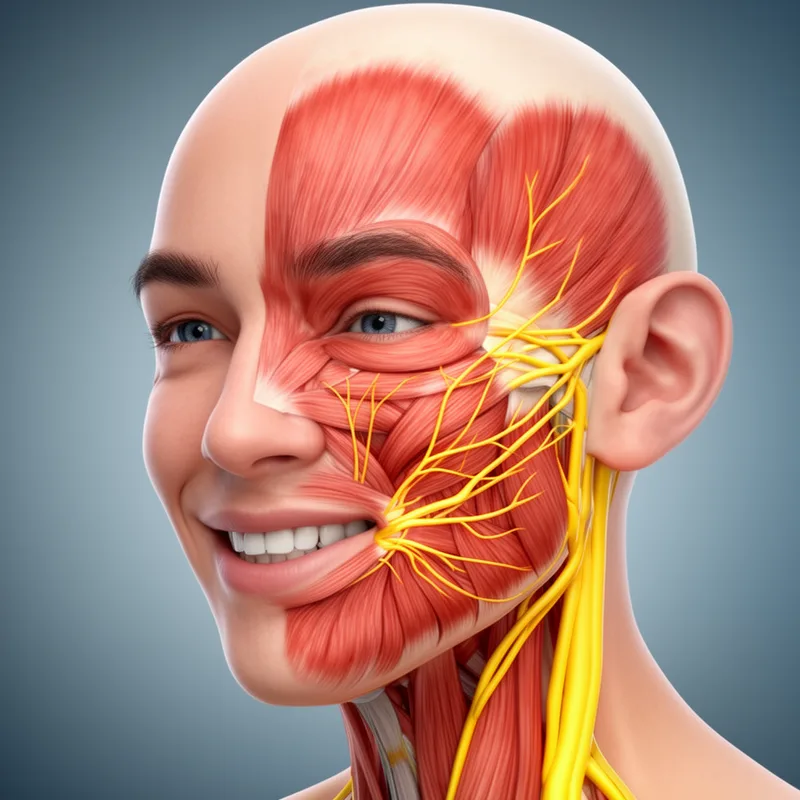
nervus facialis
- noun
- /ˈnɜrvəs fəˈeɪʃələs/
- Specialized
- Damage to the nervus facialis can result in facial paralysis.
Examples
-
The nervus facialis controls the muscles that allow us to smile and frown.
-
Bell's palsy is a condition that affects the nervus facialis.
-
The surgeon identified the nervus facialis during the procedure to avoid any injury.
-
The nervus facialis is responsible for facial movements.
-
She has an issue with her nervus facialis.
-
Damage to the nervus facialis can result in facial paralysis.
-
The surgeon identified the nervus facialis during the procedure to avoid any injury.
Synonyms

 2
5.5
2
5.5

A nerve that controls the muscles that move the face and carries feeling from it

A nerve in the head that controls the muscles of the face and taste at the front of the tongue
Surface Forms
Morphology
nervus + facialis
This is a transparent Latin anatomical compound: 'nervus' = nerve and 'facialis' = face/facial, so the meaning 'facial (seventh cranial) nerve' is directly compositional. Anatomical naming conventions and the close correspondence to English 'facial nerve' make the sense immediately recoverable to a learner who knows both constituents.
Etymology
Nervus facialis comes from Latin: nervus means 'nerve' and facialis means 'of the face'. So the name literally means 'nerve of the face', which is why it refers to the nerve that controls the face muscles and facial expression.