

seventh cranial nerve
- noun
- /ˈsɛvənθ ˈkreɪniəl nɜrv/
- Specialized
- After the accident, the doctor diagnosed an injury to the seventh cranial nerve, affecting her ability to taste food.
Examples
-
It's caused by viral damage to the seventh cranial nerve, but no one knows what brings on the virus.
Academic text (1999) -
The seventh cranial nerve is essential for controlling facial expressions such as smiling and frowning.
-
The nerves, the nerve ends, Bateman, the seventh cranial nerve, which has its root here, from this come the nerves that control the muscles of the face.
-
Damage to the seventh cranial nerve can lead to facial paralysis and loss of taste sensations.
Synonyms
 2
5.5
2
5.5

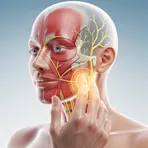
A nerve that controls the muscles that move the face and carries feeling from it

A nerve that moves the muscles of the face
Surface Forms
Morphology
The phrase is fully compositional: 'seventh' marks the ordinal, 'cranial' specifies location relating to the skull/brain, and 'nerve' names a nerve, so a learner who knows the constituents can infer it is the seventh nerve of the cranial (skull) nerves. Although detailed clinical functions (facial muscle control and taste) are domain-specific facts beyond simple composition, the referential identity of the expression is directly derivable from the parts.
Etymology
Seventh cranial nerve simply says it is the nerve number seven and that cranial means 'of the skull'. It controls the muscles of the face and taste at the front of the tongue, so the name points to its place and job.