
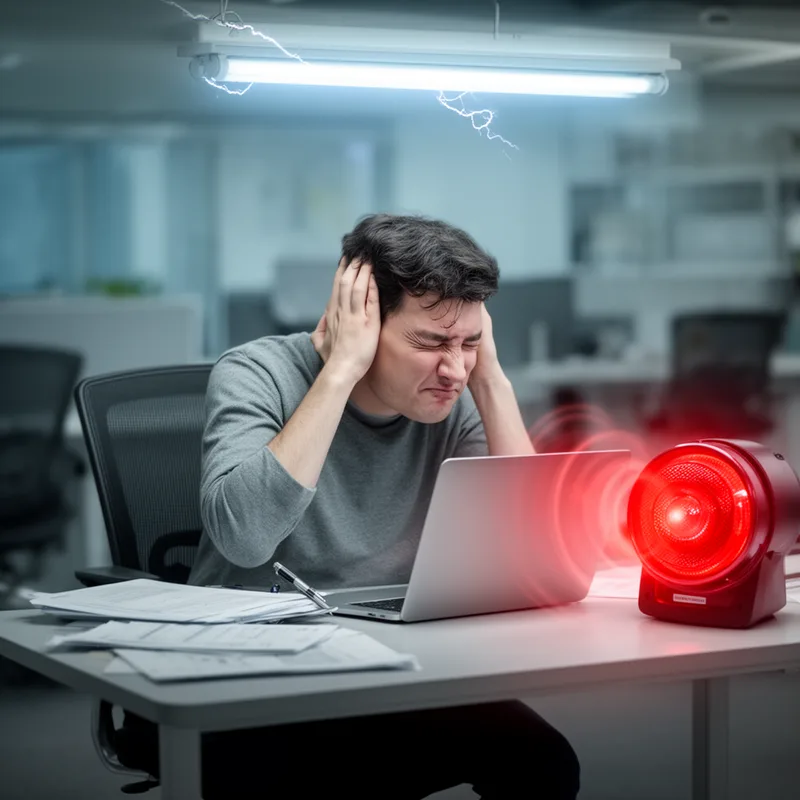
negative stimulation
- noun
- /ˈnɛɡətɪv ˌstɪmjʊˈleɪʃən/
- Prolonged negative stimulation can lead to disengagement and decreased performance at work.
Examples
-
The negative stimulation from the harsh criticism affected her performance.
-
Many students experience negative stimulation during high-pressure exams.
-
Children exposed to negative stimulation may develop avoidance behaviors in similar situations.
-
The experiment measured participants' reactions to both positive and negative stimulation.
-
Prolonged negative stimulation can lead to disengagement and decreased performance at work.
-
Children exposed to negative stimulation may develop avoidance behaviors in similar situations.
-
Many students experience negative stimulation during high-pressure exams.
Synonyms

 7
5.1
7
5.1

Something that makes you lose interest and want to avoid a person or thing


 1
7.1
1
7.1
Something unpleasant that makes an action less likely

Something unpleasant that makes a person or animal learn to stay away
Antonyms

How Unpleasant

Surface Forms
Morphology
This is a straightforward adjective + noun composition: 'negative' simply qualifies 'stimulation' to mean stimulation that is unpleasant or adverse, so a B1 learner who knows both words can infer 'unpleasant or aversive input'. Although 'stimulation' often has positive connotations, the modifier reverses the polarity in a regular, predictable way that is cross-linguistically common.
Etymology
Negative stimulation gives a simple image of a loud alarm or a bad smell that makes you react: negative means bad and stimulation means something that causes a reaction. That's why it means 'unpleasant input that causes discomfort, makes you avoid something, or lose interest'.