
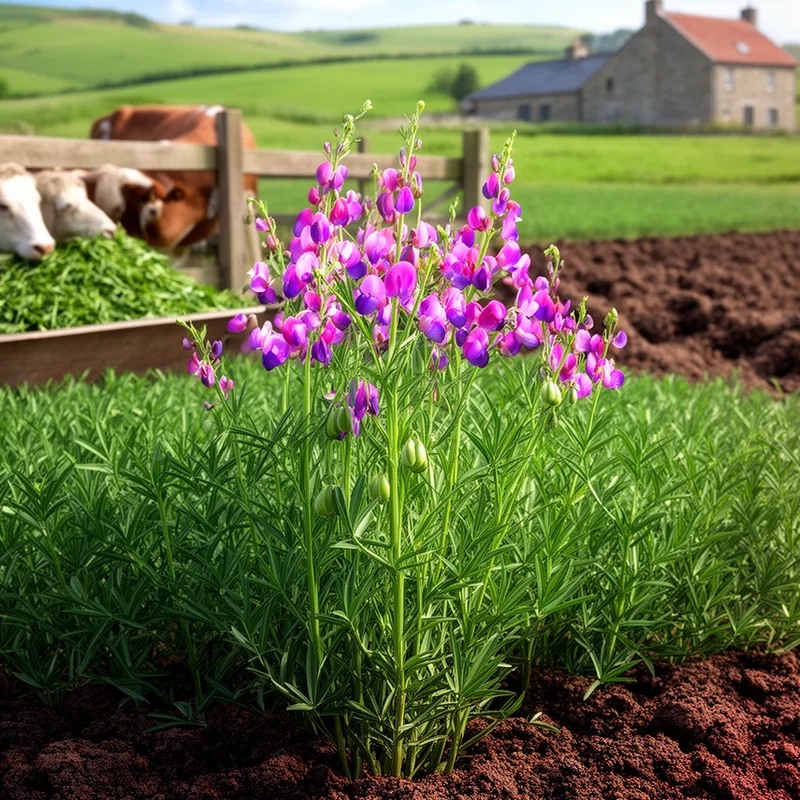
narrow-leaved everlasting pea
- noun
- The narrow-leaved everlasting pea is often used as green manure to enrich the soil.
Examples
-
Farmers sometimes cultivate the narrow-leaved everlasting pea to provide fodder for livestock.
-
Gardeners appreciate the vibrant colors of the narrow-leaved everlasting pea when it blooms in late summer.
-
The narrow-leaved everlasting pea blooms beautifully in the spring.
-
Farmers often plant narrow-leaved everlasting peas for their soil benefits.
-
Farmers sometimes cultivate the narrow-leaved everlasting pea to provide fodder for livestock.
-
The narrow-leaved everlasting pea is often used as green manure to enrich the soil.
-
Gardeners appreciate the vibrant colors of the narrow-leaved everlasting pea when it blooms in late summer.
Synonyms

A European plant with pink and purple flowers grown for animal feed and to improve soil
A European perennial plant with purple and pink flowers grown for animal feed and to improve soil
Surface Forms
Morphology
narrow-leaved + everlasting + pea
This is a straightforward compositional plant name: 'narrow-leaved' specifies the leaf shape and 'everlasting pea' denotes a type/variety of pea, so a learner who knows the constituent words can infer it is a pea plant with narrow leaves (of the everlasting/long‑lasting variety). The adjective+noun structure is a common, cross-linguistic naming pattern, making the meaning predictable from the parts.
Etymology
Narrow-leaved everlasting pea tells you what the plant is: it has thin, narrow-leaved leaves, pea-like flowers so it is called a pea, and it comes back every year, so people called it everlasting. That's why the name helps you remember it 'lives for many years' and often flowers for a long time.

