

name calling
 2
4.9
2
4.9

- noun
- /neɪm ˈkɔːlɪŋ/
- Offensive
- name calling can escalate conflicts and prevent meaningful dialogue between parties.
Examples
-
For that reason, I really dislike the ideological name-calling.
Blog text (4) -
Any time someone comes back to you with evidence, you simply avoid it with name-calling.
Blog text (25) -
Obviously, you are not confident in your arguments if you have to resort immediately to name-calling.
Blog text (13) -
Make sure you stay focused on the problem and finding solutions, not name-calling or using words to demean the other person's character.
Blog text (24) -
Name-calling and finger-pointing aren't going to change this situation.
Blog text (31) -
In school, teachers often address name calling to promote a more respectful environment.
-
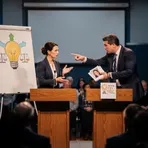
During the debate, she criticized the opponent for using name calling instead of addressing the issues.
Synonyms
 155
3.4
155
3.4
Rude or insulting words said to hurt someone
 38
4.9
38
4.9
Using rude words to insult someone
 34
6.3
34
6.3
An insulting remark meant to hurt someone
 17
8.7
17
8.7
An insulting word or phrase that hurts someone
 11
7.7
11
7.7
A sharp remark that humiliates someone in an argument
 9
4.8
9
4.8
Making unfair personal attacks to damage someone's reputation in politics
 6
8.4
6
8.4
Saying or writing very harsh and unfair things about someone to damage their reputation
 5
8.4
5
8.4
Unfair criticism that makes someone or their work seem bad
 3
8.1
3
8.1
Talking about someone in a way that shows dislike and makes them seem unimportant
 3
8.6
3
8.6
Attacking a person in an argument instead of their idea
 3
8.1
3
8.1
Say rude or insulting things to make someone feel bad


 1
7.8
1
7.8
Saying a word or phrase to insult other people

Words someone says to hurt another person

An insulting word used instead of a more neutral one

A comment or action that makes someone feel unimportant
Antonyms


How Abusive
- Literature
15
7.3

- Offensive
313
1.3
- Offensive
2
4.9
Surface Forms
Morphology
The noun 'name calling' literally describes the act of 'calling (someone) names' — using words (names) to insult or attack someone — so a B1 learner who knows 'name' and 'call' can readily infer this meaning. The formation is compositional and mirrors common cross‑linguistic patterns for insulting speech, making it immediately understandable rather than idiomatic.
Etymology
The phrase name calling comes from the image of someone loudly saying a hurtful name to another person, literally calling them a bad word. So name calling now means using insulting words to 'attack' someone instead of talking about the real problem.