
mutase


 1
9.9
- noun
- /ˈmjuːteɪs/
- Specialized
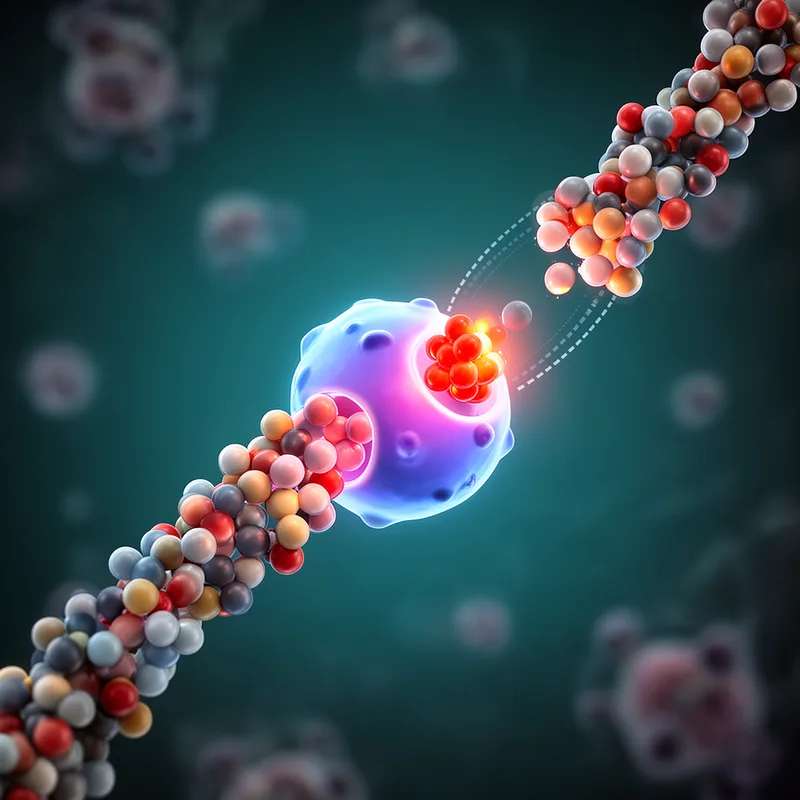
- In the metabolic process, a mutase transfers a phosphate group from one carbon atom to another within the same molecule.
Loading YouTube…
Watch on YouTubeAnother mutase you will encounter is in the glycogen breakdown pathway.
- Another mutase you will encounter is in the glycogen breakdown pathway.
Examples
-
This is first converted via a mutase reaction to move the phosphate from the six to the one position of glucose.
-
Another mutase you will encounter is in the glycogen breakdown pathway.
-
Phosphoglycerate mutase deficiency
Academic text (2005) -
For example, P. tricornutum has a putative methylmalonyl-CoA mutase gene that was slightly up-expressed in Q2 and Q3 (1.3 and 2.0-fold, respectively; p < 0.05).
Blog text (18) -
Phosphoglycerate is converted to 2,3-bisphosphoglycerate by a specific mutase in the glycolysis pathway.
-
Researchers identified a novel mutase that plays a crucial role in the biosynthesis of amino acids.
Surface Forms
Morphology
Etymology
Mutase starts with the Latin root mut- meaning 'change', as in mutate or mutation, and ends with -ase, the common ending for enzymes like lipase. So a mutase is an enzyme that helps make a small 'change' inside a molecule by moving a part from one place to another.