
musique concrète
- noun
- /mjuˈziːk kɒ̃ˈkrɛt/
- Specialized
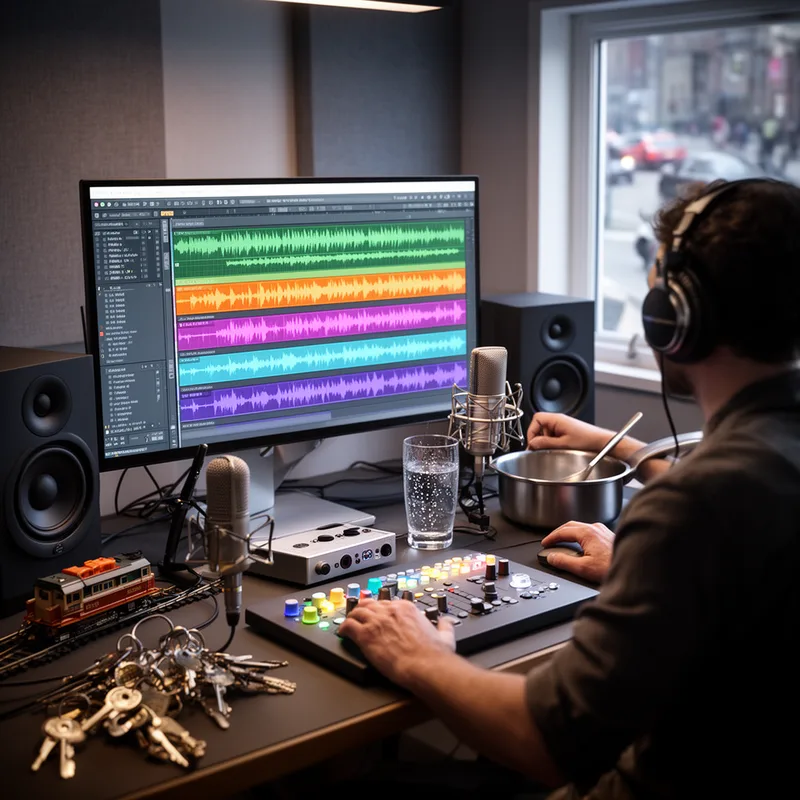
- The workshop aimed to introduce participants to musique concrète, encouraging them to manipulate recorded sounds and create unique compositions.
Examples
-
With "Revolution 9," of course, Lennon plunges headfirst into the musique concrète tradition of Stockhausen and Varese.
Blog text (17) -
The album features a variety of styles, including a track that exemplifies musique concrète by using everyday sounds like clanging pots and train whistles.
-
Artists often use musique concrète to experiment with sound, transforming environmental noises into compelling pieces of art.
How Experimental
- Specialized

- Specialized


 1
7.2
10
3.2
65
2.9
Surface Forms
Morphology
musique + concrète
Literally 'musique' = music and 'concrète' ≈ concrete/real, so a learner who knows both words could plausibly infer 'music made from real/recorded (concrete) sounds', which approximates the concept. However the term is a specialized, historically French technical label for a particular compositional practice (electronic manipulation/arrangement of recorded sounds) and that exact technical sense is not fully predictable from the parts, making it only partially transparent.
Etymology
Musique concrète was named by French composers in 1940s Paris who built music from real recorded sounds like trains, voices, and everyday objects. The word concrète means 'real', so the name gives the image of music made from actual sounds that are cut, changed, and put together in the studio — that's why it now means music made from recorded sounds.