
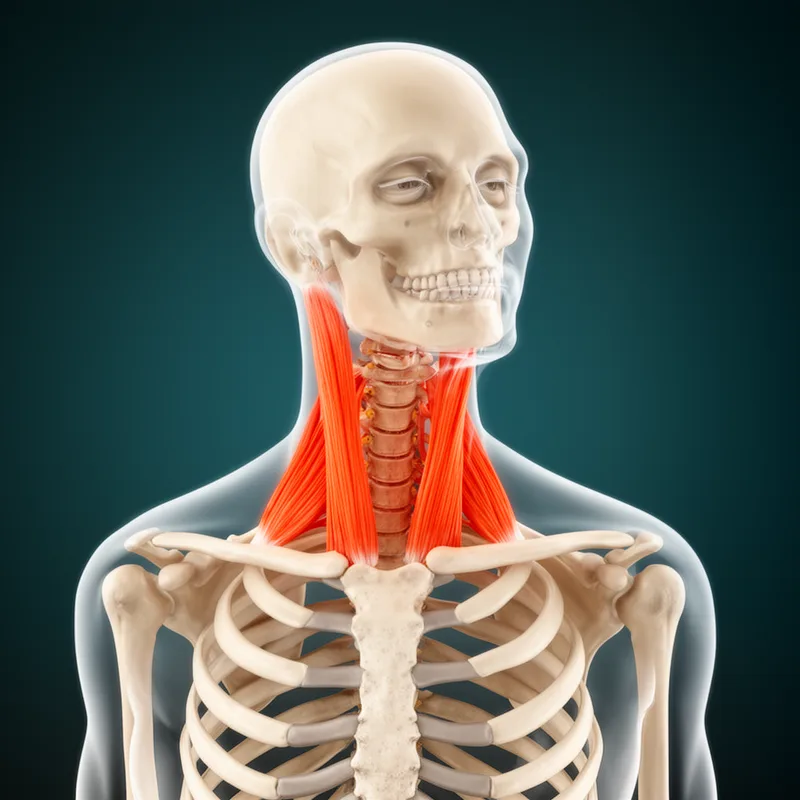
musculus scalenus
- noun
- /ˈmʌskjələs ˈskeɪlənəs/
- Specialized
- The musculus scalenus assists in elevating the first and second ribs during deep inhalation.
Examples
-
The surgeon took care to avoid damaging the musculus scalenus during the procedure.
-
Neck pain may sometimes be related to tension in the musculus scalenus.
-
The musculus scalenus plays a crucial role in neck stability.
-
Injuries to the musculus scalenus can affect breathing.
-
The musculus scalenus helps lift the ribs when we take a deep breath.
-
Tightness in the musculus scalenus can lead to discomfort in the neck and shoulders.
-
During the yoga class, we focused on relaxing the musculus scalenus to improve our breathing.
Synonyms

A muscle on the side of the neck that moves the neck and helps you breathe

A neck muscle that helps move the head and lift the top ribs when breathing
Surface Forms
Morphology
This is a transparent Latinate anatomical compound: 'musculus' means 'muscle' and 'scalenus' specifies the particular neck muscle, so a learner who knows both constituents can infer it refers to the scalenus muscles of the neck. Latinate anatomical naming is regular across many languages, reinforcing the compositional interpretation for learners.
Etymology
Musculus scalenus comes from older words: musculus means 'muscle' and scalenus may come from a Greek word meaning 'uneven' or 'slanted'. The name creates a simple picture — these muscles run at different angles from the neck to the first two ribs, so they help turn the neck and lift the ribs for deep breathing.

