
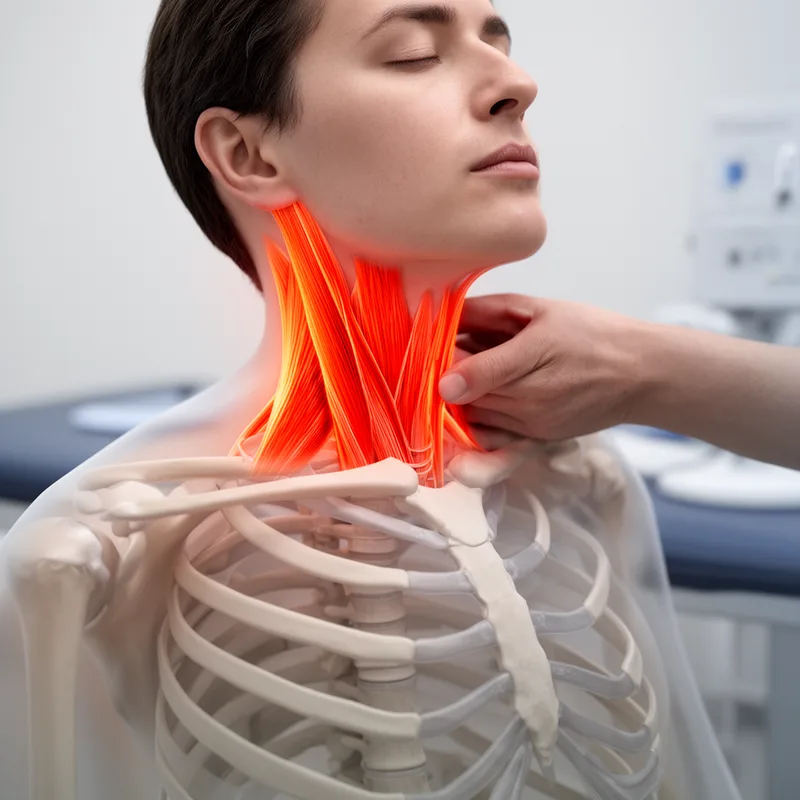
scalene muscle
- noun
- /ˈskeɪliːn ˈmʌsəl/
- Specialized
- Inhalation is assisted by the contraction of the scalene muscles during deep breathing.
Examples
-
The scalene muscle helps in neck movement.
-
The doctor explained that the pain was due to tightness in the scalene muscle.
-
Physical therapists often treat the scalene muscle to relieve neck stiffness.
-
Many athletes strengthen their scalene muscles for better performance.
-
The scalene muscles play a crucial role in neck movement and help with breathing.
-
During the anatomy class, we learned that the scalene muscles connect the cervical vertebrae to the ribs.
-
Stretching the scalene muscles can relieve tension in the neck and improve mobility.
Synonyms

A neck muscle that helps move the head and lift the top ribs when breathing

A neck muscle that connects neck bones to the first two ribs and helps breathing and head movement
Surface Forms
Morphology
This is a straightforward adjective + noun composition: 'scalene' qualifies the type of 'muscle', so the phrase simply denotes a muscle that is scalene. The meaning is directly derivable from the constituents and follows a common cross‑linguistic modifier+noun pattern, so a learner who knows both words would understand it.
Etymology
Scalene muscle gets its name from the Greek word scalene, which meant 'unequal' and was used for a triangle with sides of different lengths. So the name describes the small muscles at the side of the neck that are different in size and help with neck movement and breathing.

