
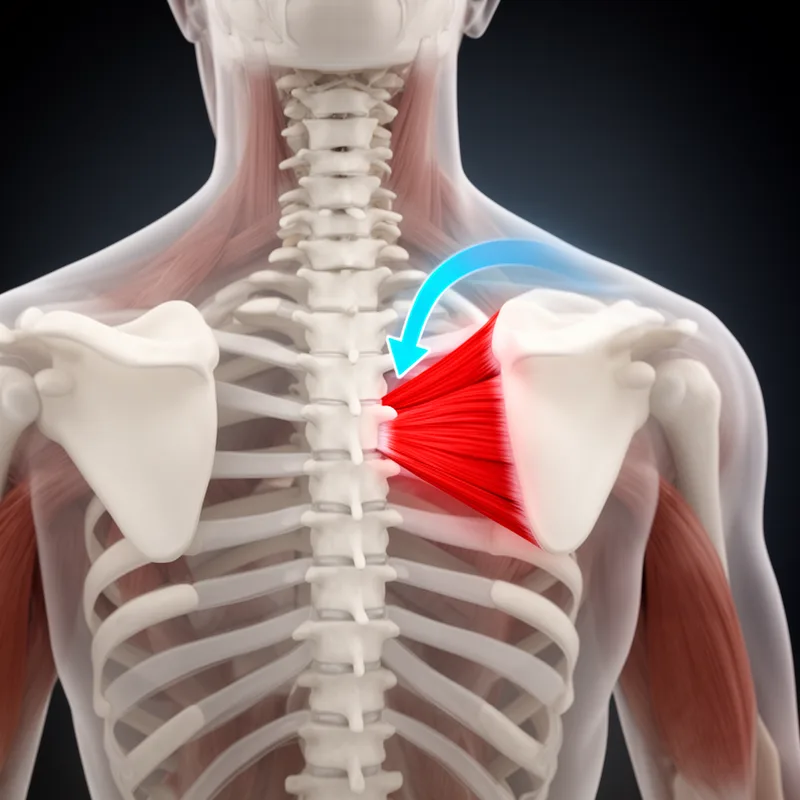
musculus rhomboideus minor
- noun
- /ˈmʌskjələs ˌrɒm.bɔɪˈdiː.əs ˈmɪn.ər/
- Specialized
- The musculus rhomboideus minor helps stabilize the shoulder blade during arm movements.
Examples
-
Physical therapists often target the musculus rhomboideus minor when treating poor posture.
-
Injury to the musculus rhomboideus minor can cause pain between the shoulder blades.
-
The musculus rhomboideus minor is essential for proper shoulder movement.
-
Can you identify the musculus rhomboideus minor in this diagram?
-
Physical therapists often target the musculus rhomboideus minor when treating poor posture.
-
The musculus rhomboideus minor helps stabilize the shoulder blade during arm movements.
-
Injury to the musculus rhomboideus minor can cause pain between the shoulder blades.
Synonyms

A small upper back muscle that pulls the shoulder blade toward the spine and slightly up

A muscle in the upper back under the trapezius that pulls the shoulder blade toward the spine and slightly up
Surface Forms
Morphology
musculus + rhomboideus + minor
The term is transparently compositional: musculus = muscle, rhomboideus = rhomboid-shaped, and minor = smaller, so the phrase literally denotes a smaller rhomboid-shaped muscle. Although this is specialized Latin anatomical terminology that may be unfamiliar to general learners, if a B1 learner knows the constituent meanings they can directly infer the MWE's meaning following common anatomical naming patterns.
Etymology
Musculus rhomboideus minor is a Latin name that describes the muscle: musculus means 'muscle', rhomboideus means 'rhomboid' or 'like a small diamond', and minor means 'smaller'. It is the small diamond-shaped muscle in the upper back that pulls the shoulder blade toward the spine, so the name tells its shape, size, and action.

