
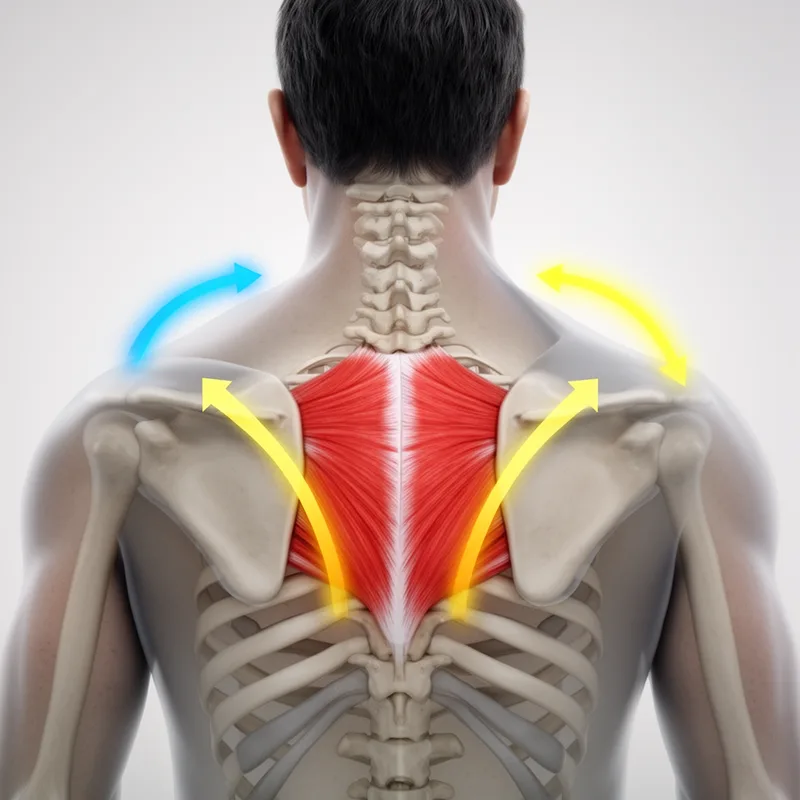
lesser rhomboid muscle
- noun
- /ˈlɛsər ˈrɒmˌbɔɪd ˈmʌsəl/
- Specialized
- Physical therapists often recommend exercises to strengthen the lesser rhomboid muscle for improved back health.
Examples
-
The lesser rhomboid muscle plays a vital role in retracting the shoulder blade during movement.
-
Many athletes strengthen their lesser rhomboid muscles for better posture.
-
In cases of poor posture, the lesser rhomboid muscle can become weak or strained.
-
The lesser rhomboid muscle plays a crucial role in shoulder movement.
-
Physical therapists often recommend exercises to strengthen the lesser rhomboid muscle for improved back health.
-
In cases of poor posture, the lesser rhomboid muscle can become weak or strained.
-
The lesser rhomboid muscle plays a vital role in retracting the shoulder blade during movement.
Synonyms

A small upper back muscle that pulls the shoulder blade toward the spine and slightly up
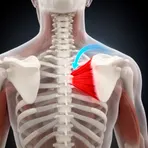
A small back muscle that pulls the shoulder blade toward the spine and slightly up
Surface Forms
Morphology
The phrase is fully compositional: 'rhomboid' names a particular muscle group, 'muscle' classifies it, and 'lesser' signals the smaller or secondary one. Even if the term is technical, a B1 learner who knows the constituent words can infer it means the smaller rhomboid muscle in the upper back.
Etymology
Lesser rhomboid muscle gets its name from a simple picture: lesser means 'small', rhomboid means 'diamond-shaped', and muscle is the body part. Because this small diamond-shaped muscle sits under the shoulder and literally 'pulls the shoulder blade toward the spine and a little up', the name helps you remember what it looks like and what it does.

