
mucosal
 2
7.9
2
7.9

- adjective
- /mjuˈkoʊsəl/
- Specialized
- Inflammation can lead to changes in the mucosal surface of the intestines.
- mucosal thickening
- mucosal atrophy
- mucosal cells
Loading YouTube…
Watch on YouTubeThey're little axons and dendrites within the mucosal lining of the gut.
- They're little axons and dendrites within the mucosal lining of the gut.
- And inside of that tube is a mucosal lining.
Examples
-
Once food intake dies down again, fewer mucosal cells are produced and intestinal mass decreases.
Academic text (1993) -
Follow-up stroboscopic examination revealed improvement of the mucosal wave in all patients who recovered functionally.
Academic text (1996) -
In the other five animals, only the mucosal lining of the cochlear wall was removed.
Academic text (1998) -
A provisional diagnosis of active mucosal chronic otitis media was made.
Academic text (2008) -
The small intestinal mucosal epithelial structure appeared intact, with a thick and uniform cell coat.
Academic text (2015) -
Under general anesthesia, triple endoscopy was performed and no mucosal lesions were found.
Academic text (1996) -
Comparison of the two films shows decreased mucosal thickening and improved sinus aeration after treatment.
Academic text (1998) -
Low-dose dopamine contributed to mucosal hypoxia in an experimental model of haemorrhagic shock.
Academic text (2000) -
The X-ray finding was considered normal when a mucosal swelling of 0-15% was found in the maxillary sinus.
Academic text (1998) -
The small intestinal mucosal epithelial cells appeared to disperse outwards, indicative of compromised structural integrity.
Academic text (2015)
Synonyms
 8
6.8
8
6.8
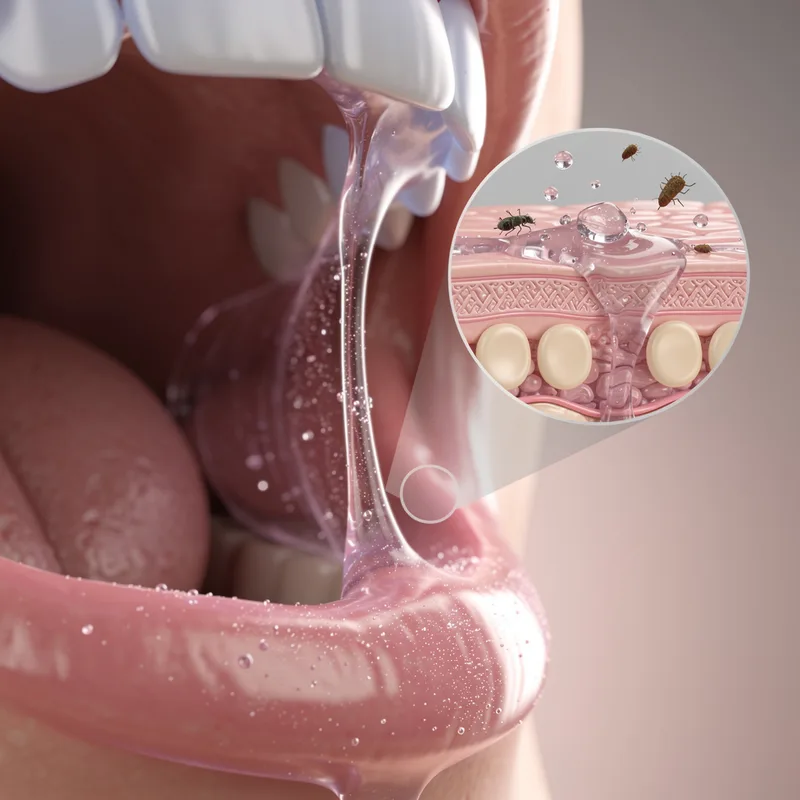
Having a wet, sticky layer that lines parts of the body
How Deep
- Specialized

 1
9.9
1
9.9

- Specialized
20
3.3
- Specialized
- Specialized
2
7.9
Surface Forms
Morphology
Etymology
Mucosal comes from mucus, a Latin word meaning 'slime' or 'mucus', plus the ending -al meaning 'related to'. So mucosal means 'related to the wet lining' inside places like your nose, mouth, or intestines, which is why it describes the body's mucous membranes.