

mother cell
- noun
- /ˈmʌðər sɛl/
- Specialized
- The mother cell divides to form two daughter cells.
Examples
-
A mother cell divides to give rise to two genetically identical daughter cells.
-
The yeast mother cell produces a small bud that eventually separates as a new organism.
-
Spores are produced when a mother cell undergoes meiotic division.
-
In biology, a mother cell is essential for growth.
-
During cell division, the mother cell splits to produce two genetically identical daughter cells.
-
The mother cell serves as the source from which new cells originate during the organism's growth.
-
After the mother cell divides, each resulting daughter cell carries the same genetic material.
Synonyms
 77
4.1
77
4.1

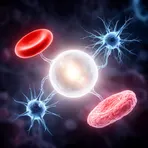
A basic body unit that can become different kinds of cells and make more of itself
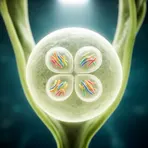
A cell in plants, fungi, or algae that divides to make four spores with half the usual genes
Surface Forms
Morphology
The meaning 'a cell that gives rise to another cell' is directly and transparently built from 'mother' (parent) + 'cell' (a living unit): the kinship metaphor maps straightforwardly to a biological parent–offspring relation. This is a conventional, cross-linguistic term in biology, so a B1 learner who knows both constituent words can reliably infer the MWE meaning.
Etymology
Mother cell gets its name from a clear image: one cell acting like a mother by making a new 'daughter' cell when it divides. So, the term means 'a cell that makes another cell'.