
monosomy
- noun
- /ˈmɒnəˌsoʊmi/
- Specialized
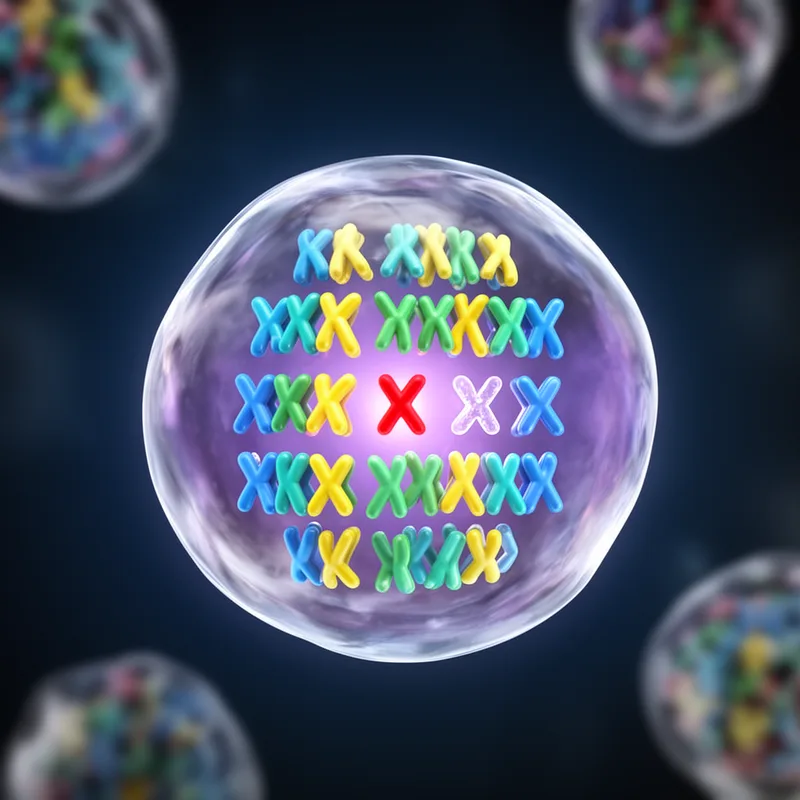
- A common example of monosomy is Turner syndrome, where one X chromosome is missing in female individuals.
Examples
-
Researchers have identified several health issues associated with monosomy, particularly in developmental biology.
-
Of course, with the basics of the 46 chromosomes of the human genome, it is easy enough to recognize an addition or deletion of one or another gene or chromosome abnormality, as with trisomy or monosomy conditions.
Academic text (2005) -
In genetics, the term monosomy refers to the loss of one chromosome from a pair within a diploid organism.
Synonyms

 1
6.1
1
6.1

A change in the number or shape of chromosomes that often causes health problems
 1
6.7
1
6.7
A change in the number or shape of chromosomes that often causes health problems


 1
9.9
1
9.9
An abnormal number of chromosomes in a cell that is not the usual amount
 1
8.9
1
8.9
A change in the usual number or shape of chromosomes that often causes physical and mental problems
 1
5.3
1
5.3
A health condition caused by a change in chromosomes that can affect the body or mind

A condition in which an organism has a different number of chromosomes than normal for its species
Surface Forms
Morphology
monosomy = mono + som + y
Although the word contains the familiar prefix 'mono-' and a bound Greek root, the medical meaning of a chromosome missing from a pair is specialized and not predictable for an average learner.
Etymology
Monosomy comes from the Greek parts mono- meaning 'one' and soma meaning 'body', and you can think of mono- like in monologue ('one'). So monosomy literally suggests 'one body' and is used when one chromosome of a pair is missing from the usual set.