
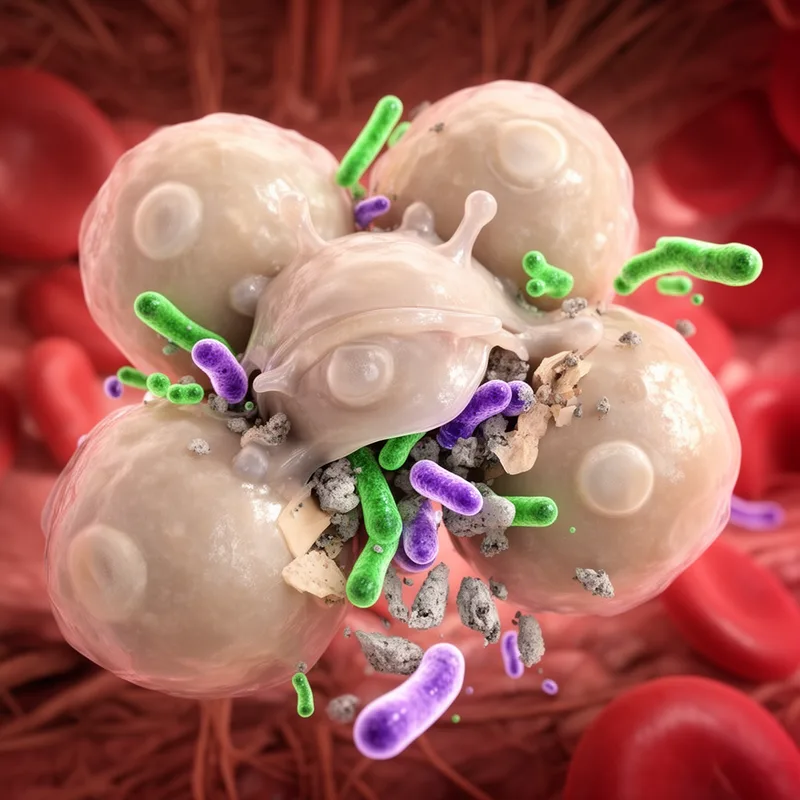
mononuclear phagocyte system
- noun
- /ˌmɒnəˈnjuːklɪər ˈfæɡəˌsaɪt ˈsɪstəm/
- Specialized
- Understanding the mononuclear phagocyte system is important for developing treatments for immune-related diseases.
Examples
-
Researchers are studying the mononuclear phagocyte systems in various diseases.
-
Liver Kupffer cells are a major component of the mononuclear phagocyte system.
-
Research into the mononuclear phagocyte system has improved understanding of immune responses in various diseases.
-
The mononuclear phagocyte system helps clear pathogens and debris from tissues throughout the body.
-
The mononuclear phagocyte system plays a crucial role in the immune response.
-
Macrophages, essential components of the mononuclear phagocyte system, help defend the body against infections.
-
The mononuclear phagocyte system plays a critical role in removing cellular debris after tissue injury.
Synonyms
 2
9.5
2
9.5

A group of large cells from bone marrow that fight infection by eating harmful things in the body
A group of cells in the body that eat germs and help fight infection
Surface Forms
Morphology
mononuclear + phagocyte + system
The phrase is fully compositional: 'mononuclear' specifies the type of 'phagocyte' (a cell with a single nucleus that engulfs pathogens), and 'system' indicates an ensemble of such cells. Even though the term is technical, a learner who knows the constituent words can directly infer it denotes a bodily system of single‑nucleus phagocytic cells involved in immune cleanup.
Etymology
Mononuclear phagocyte system comes from its parts: mononuclear means cells with one nucleus and phagocyte means a cell that 'eats' germs or dead bits, and 'system' shows they work together across the body. So the phrase names the body-wide group of these eater cells that clean up debris and help fight infection.