
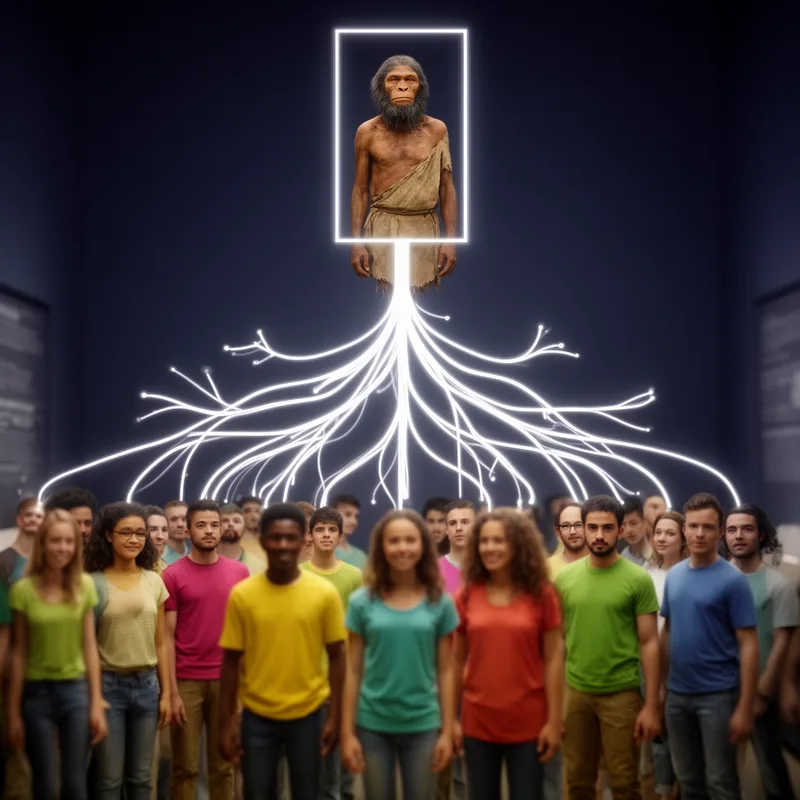
monogenism
- noun
- /ˌmɒnəˈdʒɛnɪzəm/
- Specialized
- Ethnology was still rooted in monogenism and a modified environmentalism, although the latter was shorn of the exaggerated claims made by some earlier ethnologists.
Examples
-
The concept of monogenism is important in discussions about human evolution and our origins.
-
Despite the criticism by many Enlightenment thinkers of the Christian worldview, most held to the Biblical thesis of a single human creation or monogenism.
Academic text (1996) -
A question often raised in this context is whether the human race descended from an original pair of two human beings (a teaching known as monogenism) or a pool of early human couples (a teaching known as polygenism).
Blog text (19) -
Many theologians affirm that monogenism suggests all humans share a common ancestry.
-
In studying genetics, scientists debate whether monogenism accurately represents the history of human development.
Synonyms

The idea that many different things, like languages or species, come from one original source

A species or family that comes from only one place, often after a gene change
Antonyms



How Many Origins
- Archaic

 1
9.9
1
9.9

- Specialized
Surface Forms
Morphology
monogenism = mono + gen + ism
Although the pieces suggest 'one' plus a doctrine, the specialized scientific and historical sense is not straightforward for an average B1 learner because the root 'gen' is a bound classical form rather than a familiar standalone English word.
Etymology
Monogenism begins with mono- meaning 'one' and uses gen, as in gene or generate, meaning 'birth' or 'origin'. So monogenism is the idea that a group, such as all humans or a family of languages, comes from a single ancestor or source.