
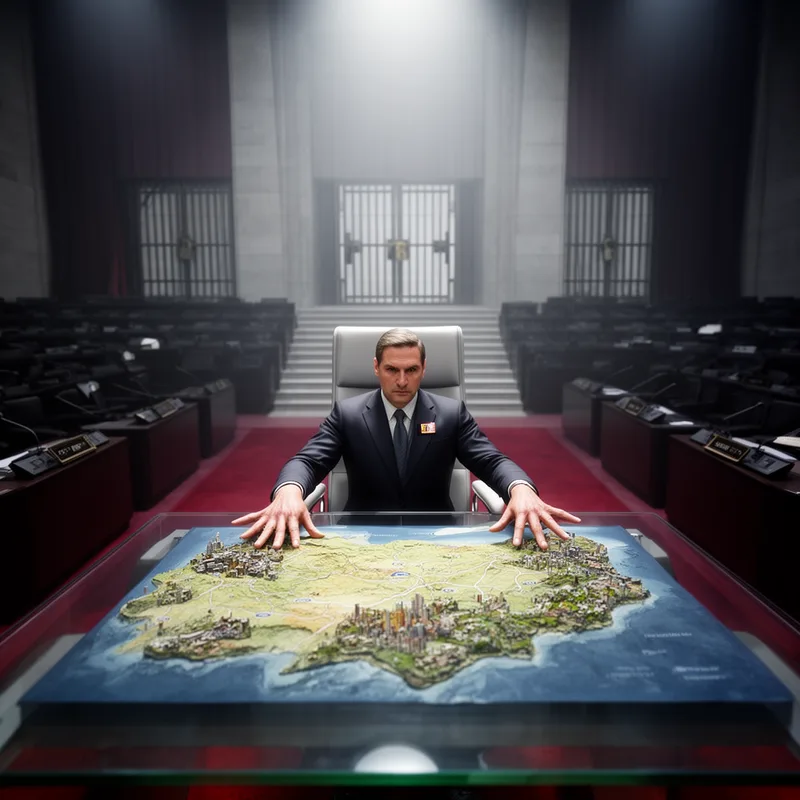
monocracy
- noun
- /məˈnɒkrəsi/
- Formal
- The country descended into monocracy when the general seized power and dissolved the parliament.
Examples
-
Throughout history, monocracy has often led to abuse of authority and lack of political freedoms.
-
In a monocracy, citizens often lack a voice in governance.
-
Debates raged over whether monocracy could ever ensure fair governance for its citizens.
-
A monocracy can lead to the concentration of power in one individual's hands.
-
The country descended into monocracy when the general seized power and dissolved the parliament.
-
Throughout history, monocracy has often led to abuse of authority and lack of political freedoms.
-
In a monocracy, citizens often lack a voice in governance.
Synonyms
 157
4.8
157
4.8

A government where one person or a small group has all power and does not allow political opposition
 109
6.7
109
6.7
One person or a small group rules a country cruelly
 7
9.6
7
9.6
A government where one person or group has all power and rules cruelly
 6
9.3
6
9.3
A political system where one leader controls everything and uses force to stop opposition
 5
8.2
5
8.2
A government in which one person has all power
 3
8.1
3
8.1
A system where one ruler has complete power
 1
8.2
1
8.2
A government where one person has all power and others cannot oppose them
 1
9.9
1
9.9
A government in Japan led by a military leader who holds most power


 1
9.9
1
9.9
A form of government where one leader has almost complete power without legal limits

A government where one person has all the power and decides everything
Antonyms

How Concentrated

Surface Forms
Morphology
monocracy = mono + cracy
The meaning is built regularly from mono- 'one' and -cracy 'rule', but both are classical combining forms rather than ordinary standalone English words, so the structure is only partly transparent for average learners.
Etymology
Monocracy comes from Greek parts mono- meaning 'one' and -cracy, from kratos, meaning 'rule' or 'power'. It is like democracy ('rule by the people') but means 'rule by one', so one person has all the power.