
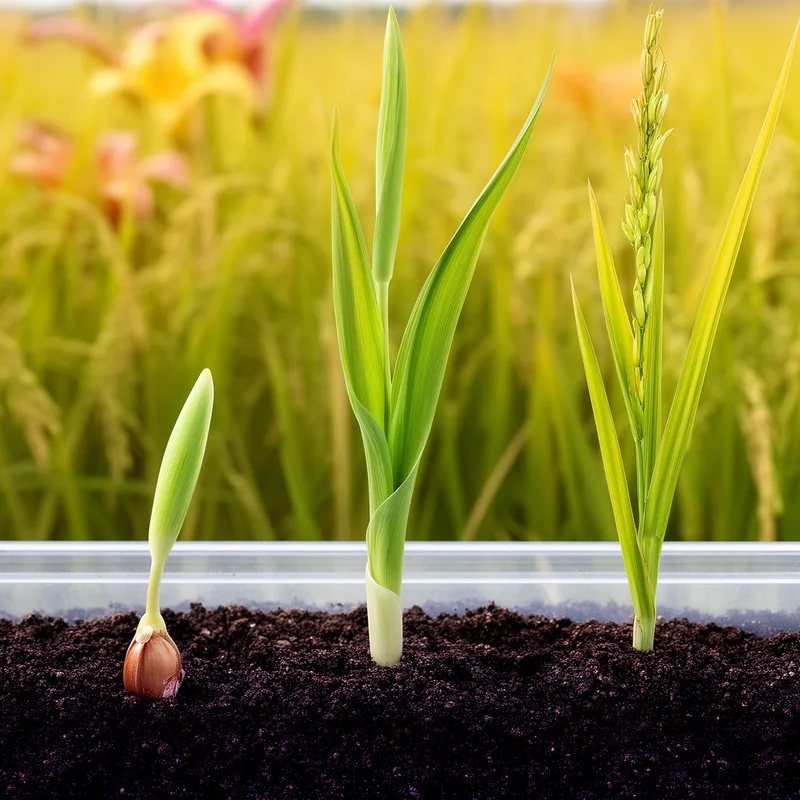
monocot


 1
9.1
1
9.1
- noun
- /ˈmɒnəˌkɒt/
- Specialized
- Many common garden plants, such as grasses and lilies, are classified as monocots because they only have one cotyledon in their seeds.
- monocots and dicots
- monocot plants
Examples
-
However, aquatic plants are more common proportionally in monocots than in dicots (Les and Schneider 1995).
Academic text (1996) -
Many monocot species are economically important, and grass species are a particularly important source of calories.
Academic text (2017) -
But why can dicots grow wood and be trees and monocots can't?
-
Within monocots, we identified lineage-specific conserved AS events.
Academic text (2017) -
This is the first report that MeJA positively regulates auxin contents and AO activities in monocot plants.
Academic text (2015) -
We calculate that white flowers occur in approximately 43% of all aquatic genera (40% of dicots, 48% of monocots; based on data in Cook 1990).
Academic text (1996) -
Nor do okapis feed on herbaceous monocots, such as those in the arrowroot and ginger families, that regularly grow in the forest openings and are important in the diets of chimpanzees and gorillas.
Academic text (1992) -
The palm tree is an example of a monocot, distinguished by its long, narrow leaves and a single embryonic leaf.
-
In botany, plants like orchids and bamboos are considered monocots due to their unique seed structure with a single leaf.
Synonyms

A flowering plant that has one seed leaf, like a grass or a lily
A flowering plant with one seed leaf, like grasses and rice
Antonyms
Compounds
- Specialized
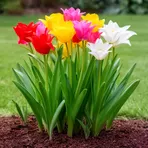
A group of similar flowering plants like tulips with long leaves and showy flowers


Surface Forms
Morphology
monocot = monocotyledon (opaque) = mono + cot
The word is a clipping of the technical term monocotyledon, so the meaning is preserved but the shortened form is not directly inferable for most learners.
Etymology
Monocot comes from mono- meaning 'one' and from cotyledon, a word that means 'seed leaf' and is often shortened to cot. So a monocot is a plant with a single seed leaf, like grass or lilies, and that image helps you remember its name.