
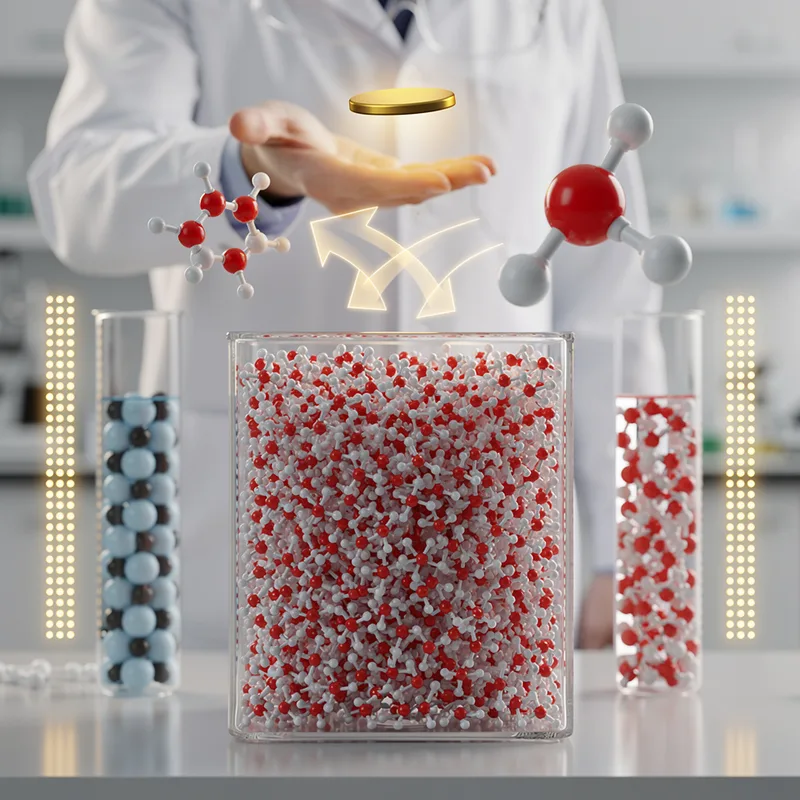
mol
 3
6.1
3
6.1

- noun
- /mɒl/
- Specialized
- In a chemical reaction, 1 mol of a substance is equal to its molecular weight in grams.
- kcal/mol
- mol/L
- mmol/mol
Examples
-
We then microwaved the samples twice for 5 minutes each in 0.1 mol/L of a citrate buffer (pH: 6.0).
Academic text (2008) -
Then 3 L of 30 mol/L ADP was added to the mixture to induce platelet aggregation.
Academic text (2014) -
Kelvin mol, delta H just about always is in units a kilojoules per mole.
-
The current NICE target for HbA1c in people with T2D is generally 48 mmol/mol.
Academic text (2012) -
112 g KOH are therefore 2 mol that dissolved in 100 ml of water.
Blog text (7) -
The reactions were terminated by adding 50 L of 2 mol/L hydrogen sulfate.
Academic text (2014) -
To make the solution, you need to dissolve 0.5 mol of sodium chloride in water.
-
The laboratory technician measured out 2 mol of glucose for the experiment.
Synonyms
 2
8.7
2
8.7
A unit in chemistry for about 6.022 times ten to the 23rd particles
Surface Forms
Etymology
The word mol comes from the German Mole, which in turn comes from Latin moles meaning 'mass' or 'pile'. So a mol is like a very large 'pile' of tiny particles, a fixed number of atoms or molecules, which is why chemists use it to count amounts of substance.