

mole
 2
8.7
2
8.7

- noun
- /moʊl/
- Specialized
- Water is denser than ice and occupies about 10% less volume per mole.
- mole conversion
- mole fraction
- calculate moles
Loading YouTube…
Watch on YouTubeIn in a mole, What's what's the mole number?
- In in a mole, What's what's the mole number?
- OK, it's your HDL cholesterol, the good cholesterol being less than one milli mole, it's being pre diabetic.
- Turns out fat has a lot more carbons per mole than carbohydrates do, So there's more calories per mole in there.
Examples
-
How much energy does it take to heat up a mole of gas?
-
All right, let's consider a mole of an ideal gas, right?
-
So this would be the number of moles you have in that box.
-
The van der Waals equation of state for a mole of fluid is.
Academic text (2002) -
The mole fraction X of the second component is one way to parameterize the relative quantities.
Academic text (2002) -
The steam content reduced to 13 mole% and 3 mole% when the temperature was increased to 973 K and 1073 K, respectively.
Academic text (2018) -
Third, each student had a laminated strategy sheet that consolidated key elements of information needed for mole conversions.
Academic text (2015) -
A nucleon weighs roughly 1 gram per mole, so 2000 grams of rock is roughly 1027 nucleons.
Blog text (3) -
Avogadro's number, approximately 6.022 x 10^23, defines how many entities are in one mole of a substance.
-
In chemistry, a mole is used to count particles, such as atoms and molecules, in a sample.
Synonyms
 3
6.1
3
6.1
A unit in chemistry for counting atoms or molecules equal to about 6.022 × 10^23 particles
Compounds

 1
9.9
1
9.9
A small mole from eastern North America with soft fur that lives mostly underground
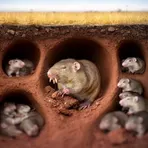
- South African

 1
9.9
1
9.9
A small burrowing mammal from western Africa that lives in underground colonies
 1
7.3
1
7.3
A small almost hairless African animal that lives underground in large groups like ants


- Specialized
A small mole with a long pointed snout that lives underground and eats insects

A small burrowing animal from eastern Asia that looks like a shrew and a mole

- Australian
A small Australian animal that lives underground and carries its babies in a pouch

A small brownish-black animal like a frog that lives underground and comes out to lay eggs


A large insect with strong front legs that digs tunnels in soft soil and eats plant roots
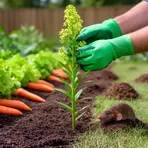


- South African
A small animal from southern Africa that lives underground and has shiny fur

- Specialized
A small animal that lives underground with a short furry tail found in eastern North America

- Specialized
A pregnancy condition where tissue grows into many fluid-filled sacs instead of a baby
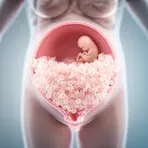
- Specialized
A rare growth in the womb during early pregnancy that forms fluid-filled cysts and often causes loss of the baby
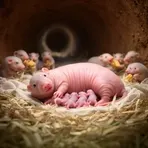
- Specialized
A larger female in a colony of naked mole rats who is the only one to have babies

- Australian
A small Australian burrowing animal with a pouch for its young that looks like a mole
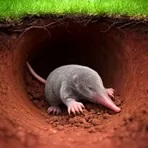
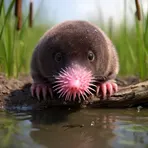
A small mole found in eastern North America that lives in water and has many pink tentacles on its nose

A small North American mole that lives in wet ground with a pink nose of many tentacles to find food
How Small
- Specialized
1
7.2

- Specialized
2
8.7
Surface Forms
Etymology
Mole (chemistry) comes from the German word Mol, short for Molekül ('molecule'), used to mean a mass or set of molecules. So a mole is now a fixed, very large number used to count tiny particles in chemistry.