
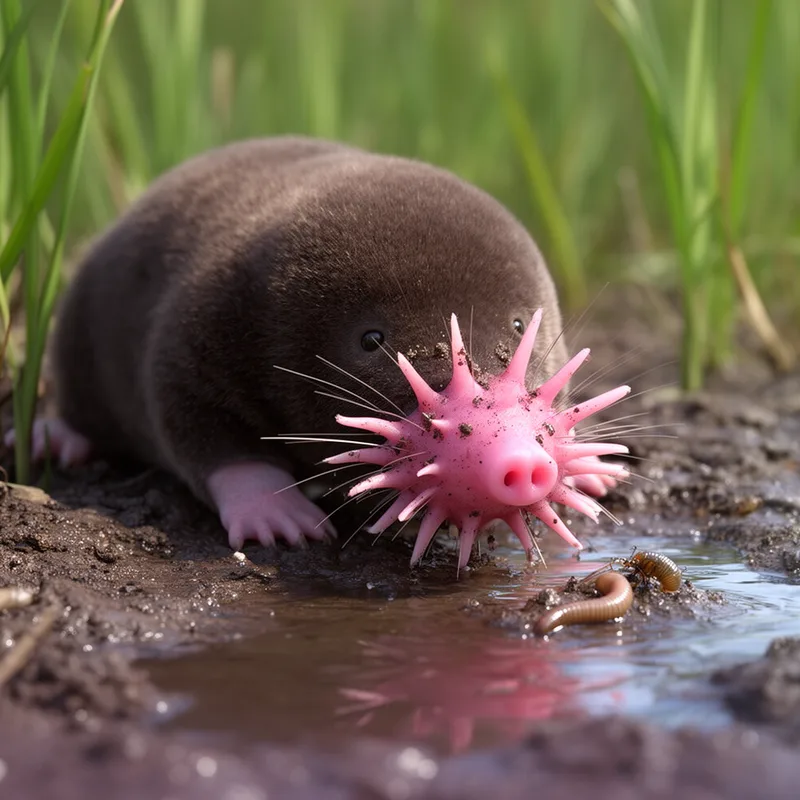
star-nosed mole
- noun
- /ˈstɑrˌnoʊzd moʊl/
- US
- The star-nosed mole is famous for its unusual nose covered in sensitive tentacles.
Examples
-
Biologists studied the habitat of the star-nosed mole in wetland areas.
-
A star-nosed mole can detect and eat its prey with astonishing speed.
-
The star-nosed mole is a fascinating creature.
-
I saw a star-nosed mole at the wildlife park.
-
In wetlands, the star-nosed mole uses its tentacles to sense food hidden in the mud.
-
The star-nosed mole, with its unique nose, is well adapted to its environment for finding insects.
-
I spotted a star-nosed mole while walking near the marsh, and its distinctive nose caught my attention.
Synonyms
A small mole found in eastern North America that lives in water and has many pink tentacles on its nose
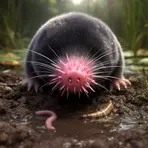
A small mole with a pink star-shaped ring of feelers on its nose that it uses to find food
Surface Forms
Morphology
star-nosed + mole
The compound is compositional: 'star-nosed' can be parsed as 'having a star-shaped nose' and 'mole' is a small subterranean mammal, so a B1 learner who knows the parts can infer it refers to a mole with a star-shaped/remarkable nose. This follows normal English compounding patterns and is therefore readily predictable from the constituents.
Etymology
Star-nosed mole is named for the pink ring of tiny touch organs on its nose that form a small star. These sensitive parts help the mole 'find food' very quickly in wet ground, so the name points to both its shape and what the animal does.

