
mistral
 1
9.9
1
9.9

- noun
- /ˈmɪstrəl/
- But as they cross the bridge, the legendary mistral starts blowing:
- mistral blew
- mistral wind
Examples
-
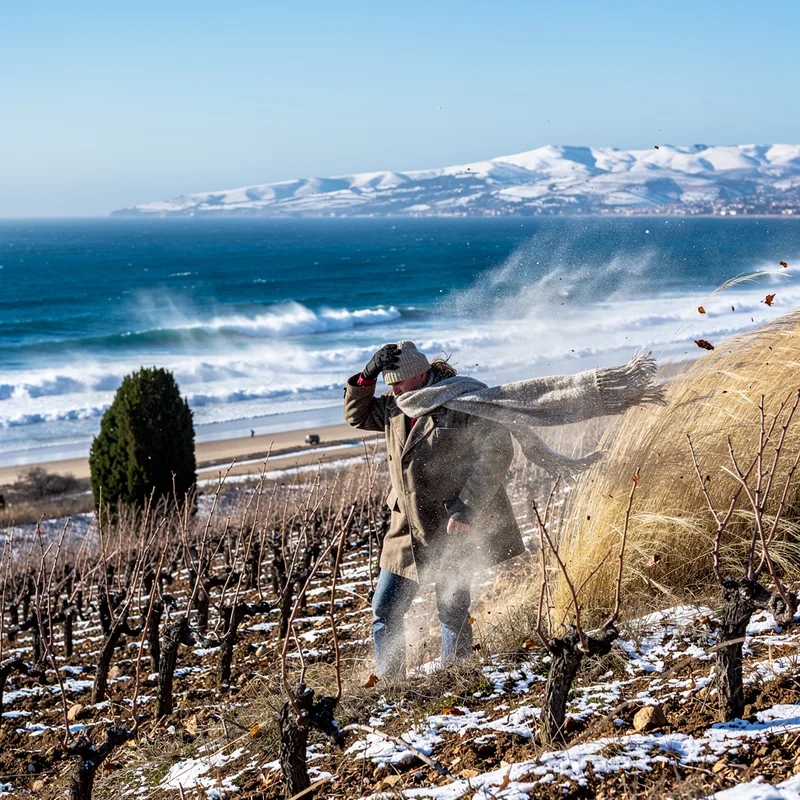
The mistral blew fiercely across the vineyards, chilling everyone who dared to venture outside.
-
Their dark masses are shown swaying in the mistral, their flamelike shapes soaring.
Academic text (1993) -
I can offer the information from experience, having walked that stretch of road a half-dozen times in the heat of the sun or when the mistral blew through my thin clothes.
Fiction book (1995) -
Both paintings show the cypresses swaying in the mistral against a wind-blown sky.
Academic text (1993) -
A late winter mistral had relented, but the sunny air still had a chilly undertone.
Fiction book (2002) -
That autumn, as the mistral blew down onto Provence, Amedee spoke of revisiting La Galite.
Fiction book (2002) -
He stood on the terrace in front of his house and battled with these things, with mistral, thunderbolts, and howling clouds.
Fiction book (1995) -
Bollne remained cut off from the railway station and elsewhere for six days; people were stuck in their houses by twelve-feet-high snow drifts that the fierce northern Mistral winds piled up in a few hours at night.
Academic text (2006) -
Sailors watch for the mistral, as it can create dangerous conditions on the Mediterranean Sea.
-
During winter, the mistral can be so strong that it disrupts daily life in southern France.
Synonyms

A cold dry north wind that blows in southeastern France, especially the Rhone valley

A cold dry wind from mountains that blows into Italy and the western Mediterranean
How Strong

Surface Forms
Etymology
The word mistral comes from an old Latin word magister that means 'master' and passed into the language of southern France. So it was called the 'master' wind because it is a strong, cold wind that sweeps down into the Mediterranean and often controls the weather there.