
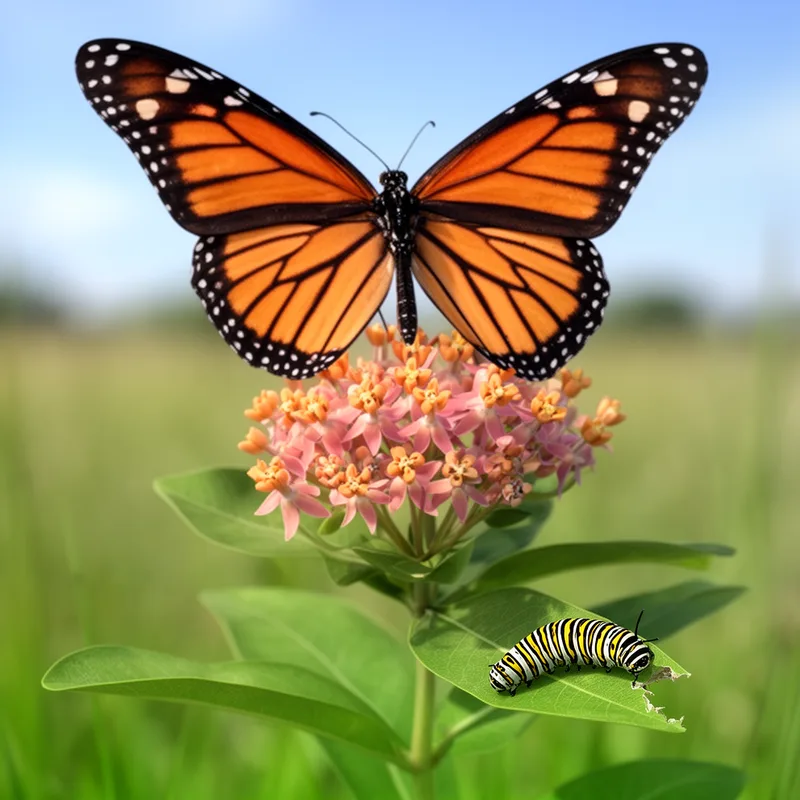
milkweed butterfly
- noun
- /ˈmɪlkˌwiːd ˈbʌtərflaɪ/
- US
- Every autumn, thousands of milkweed butterflies migrate south across North America.
Examples
-
Children often observe the transformation from caterpillar to milkweed butterfly in school science projects.
-
The milkweed butterfly is a beautiful sight in the garden.
-
The bright orange wings of the milkweed butterfly help warn predators of its toxicity.
-
Have you ever seen a milkweed butterfly in the wild?
-
The milkweed butterfly is known for its striking orange wings and is often seen in gardens during summer.
-
As the larvae of the milkweed butterfly feed on the plants, they gain the bright colors that warn predators.
-
Many people enjoy watching the milkweed butterfly flutter by, especially when they migrate south in autumn.
Surface Forms
Morphology
The meaning is directly compositional: a 'milkweed butterfly' is a butterfly associated with or feeding on milkweed, which a learner can infer from knowing 'milkweed' and 'butterfly'. This straightforward noun+noun subtype formation is a common, literal pattern across languages, so a B1 learner who knows the constituents will readily understand it.
Etymology
Milkweed butterfly gets its name from the plant its caterpillars eat: the young caterpillars eat milkweed and keep the plant's poisons, so the bright adult wings warn birds not to eat them. That's why the name links the butterfly to milkweed and its 'warning' or 'protection' from predators.

