

military censorship


 1
6.1
1
6.1
- noun
- /ˈmɪlɪˌtɛri ˈsɛn.sər.ʃɪp/
- During wartime, military censorship restricts the press from publishing sensitive information.
Examples
-
Should the military censorship of civilian newspaper reporters be pursued?
Academic text (1993) -
The government imposed military censorship to ensure that crucial security details remained undisclosed.
-
Journalists often face military censorship that limits what they can report during conflicts.
Synonyms
 119
4.8
119
4.8
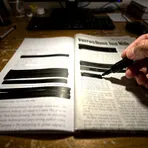
A system that removes parts of books, films or news that people find harmful
 7
7.2
7
7.2
Stopping a book or article from being published

The reading and blocking of letters and messages sent to or from soldiers by military leaders

Military officers check journalists' reports in war zones to keep information secret

Military officers check soldiers' personal letters and messages for secret information
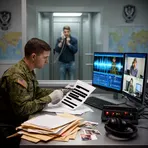
The military examines and controls personal letters and calls of soldiers or civilian staff
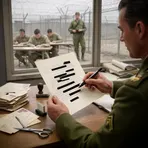
Military checking and limiting of letters and messages sent to and from captured soldiers

Official checking and blocking of civilian letters and films by the military during war
Antonyms
- Formal
15
3.2
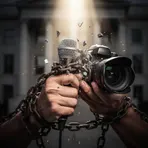
The right of newspapers and journalists to report news without government control
How Strict
 1
6.1
1
6.1
Surface Forms
Morphology
The meaning is directly and transparently derived from combining 'military' (relating to soldiers/armed forces) with 'censorship' (the practice of prohibiting or controlling information); it simply denotes censorship carried out by military authorities. This adjective+noun composition is regular and cross-linguistically common, so a B1 learner who knows both constituents would readily infer the MWE's meaning.
Etymology
Military censorship comes from the image of military officers during war reading letters and news, stamping them 'approved' or cutting out lines that might tell the enemy. So, it now means the military controlling or blocking information 'to keep secrets'.