
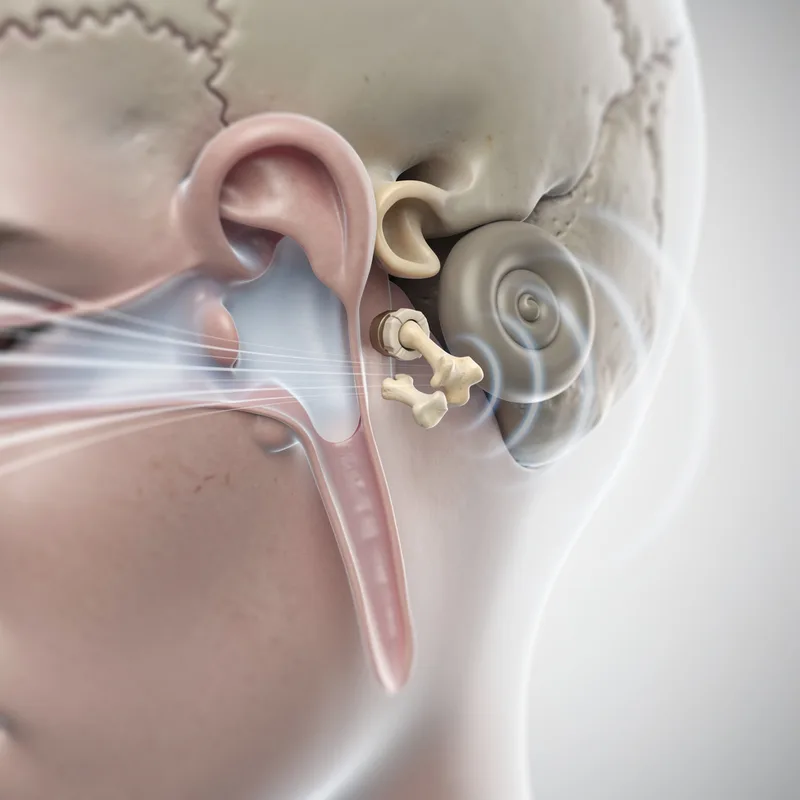
middle ear
 4
3.5
4
3.5

- noun
- /ˈmɪdəl ɪr/
- Specialized
- Hearing tests often examine the function of the middle ear to ensure proper sound transmission.
- middle ear ossicles
- middle ear tumors
- middle ear surgery
Loading YouTube…
Watch on YouTubeSo, but perhaps they do certainly the middle ear muscles do.
- So, but perhaps they do certainly the middle ear muscles do.
Examples
-
The success of this first study merits future middle ear research with the SLV measurement tool.
Academic text (1998) -
Hemotympanum due to bleeding in the middle ear, if any, resolves spontaneously.
Academic text (1998) -
At first, I thought it was my middle ear acting up.
Fiction book (2002) -
Furthermore, in order to perform these tests, the middle ear must be opened.
Academic text (2008) -
The cause of a middle ear infection tends to be elsewhere.
-
And in that middle ear cavity are three small bones.
-
No perforation of the tympanic membrane or middle ear infection was found.
Academic text (1998) -
Aggressive papillary tumors of the middle ear are rare, and their true origin is not clear.
Academic text (2008) -
The tiny bones in the middle ear help transmit sound vibrations to the inner ear.
-
A cold can cause fluid buildup in the middle ear, leading to pain and discomfort.
Synonyms

A space in the middle ear between the eardrum and inner ear that holds tiny bones for hearing
The part of the ear between the outer ear and inner ear that includes the eardrum
How Deep

Surface Forms
Morphology
The meaning 'the middle part of the ear' is directly and transparently derived from combining 'middle' (centre/intermediate) with 'ear' (hearing organ). This simple adjective + noun locational composition is cross-linguistically common and should be clear to a B1 learner who knows both constituent words, even if the medical details are unfamiliar.
Etymology
The name middle ear describes the part of the ear that sits between the eardrum and the inner ear. It is an air space with three tiny bones that pass sound along, so middle ear means the central area that helps 'hearing'.