
microwave spectrum
- noun
- /ˈmaɪkroʊweɪv ˈspɛktrəm/
- Specialized
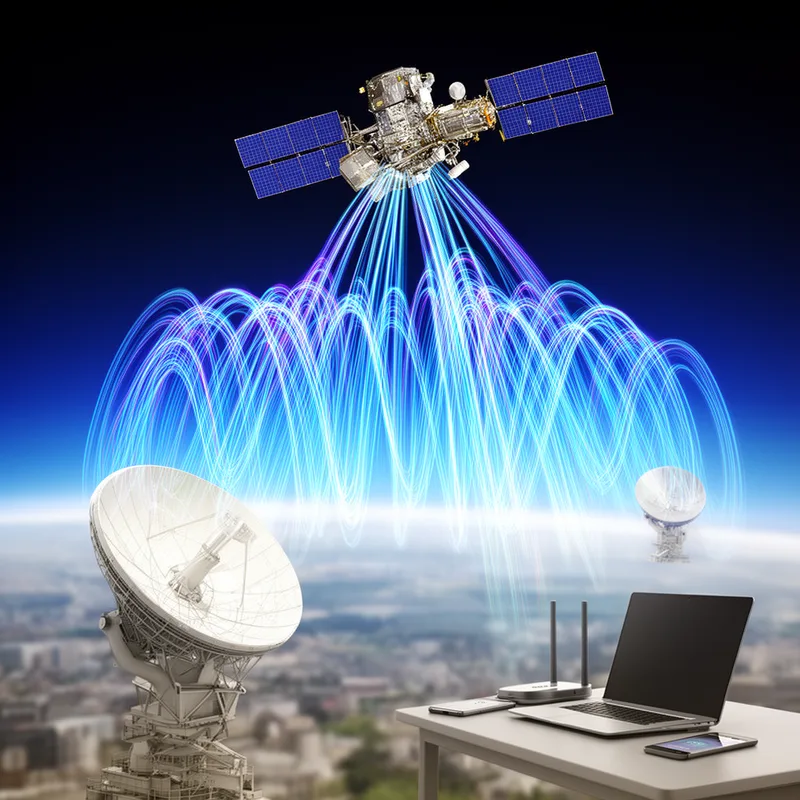
- Wireless networks often operate in the microwave spectrum to transmit data over short distances.
Examples
-
The microwave spectrum includes frequencies from 1 GHz to 300 GHz.
-
Scientists study the microwave spectrum to learn about cosmic background radiation.
-
Satellites use frequencies in the microwave spectrum for reliable long-distance communication.
-
Scientists study the microwave spectrum for various applications.
-
Scientists use the microwave spectrum to study the properties of distant galaxies.
-
The microwave spectrum ranges from 1 GHz to 300 GHz, covering a wide array of applications.
-
In telecommunications, devices often operate within the microwave spectrum to transmit data rapidly.
How High
- Specialized

- Specialized
 2
4.9
2
4.9

Surface Forms
Morphology
The meaning is a direct, literal composition of 'microwave' (a range of short-wavelength radio waves) and 'spectrum' (a band of electromagnetic wavelengths), so a learner who knows both words can infer it refers to the band of frequencies occupied by microwaves. This is a regular technical noun-noun compound with clear cross-linguistic parallels, making it readily comprehensible to a B1 learner.
Etymology
Microwave spectrum combines microwave, meaning very short radio waves, and spectrum, meaning a band or range like a rainbow of colours. Picture a small band in that rainbow that carries signals; that 'range of frequencies' is the microwave spectrum, used for things like satellite links and Wi-Fi.