
miasmatic
- adjective
- /maɪˈæzmætɪk/
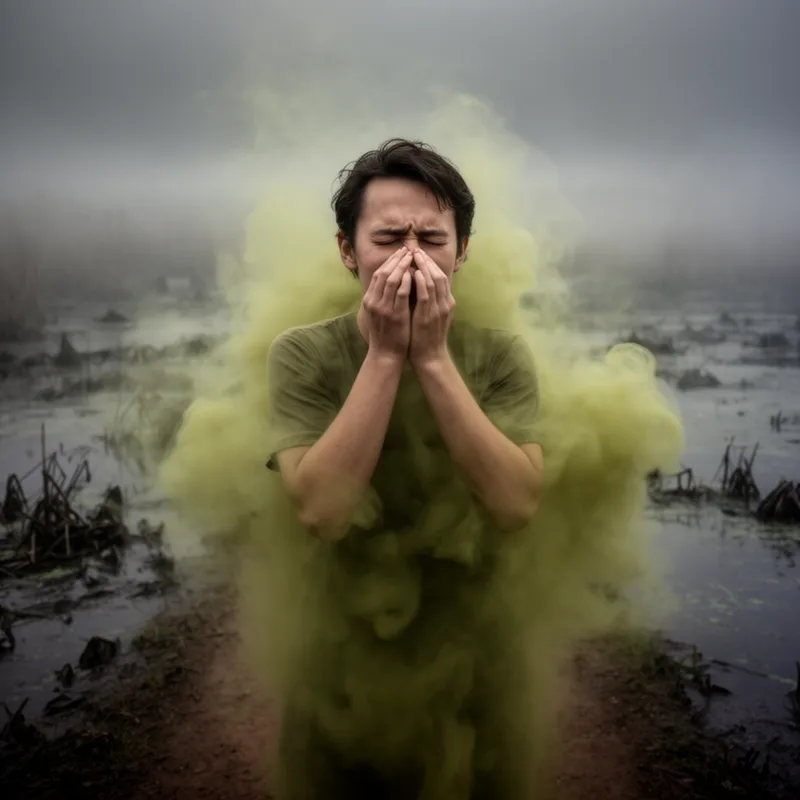
- In the miasmatic atmosphere of the old factory, employees often complained of headaches and nausea.
- miasmatic disease
- miasmatic theory
Examples
-
Instead, he draws comparisons between Dracula's castle and Carfax in terms of the miasmatic atmosphere, the dust, and the age of the building.
Academic text (2007) -
The miasmatic position was that diseases were the product of environmental factors such as contaminated water, foul air, and poor hygienic conditions.
Academic text (2007) -
The human body and constitution then had contact with the air which might be corrupted or miasmatic as it was called later.
-
The miasmatic-contagionistic theory implied to Angelerio that miasmatic contagion was present wherever plague patients had been.
Academic text (2013) -
According to miasmatic theory, plague patients were contaminated by the most dangerous type of miasma; the air of the room was also contaminated by it (6).
Academic text (2013) -
For example, Margaret Humphreys documents how 19th-century communities in the American South often preferred the miasmatic theory to the contagionist model of disease because the latter account would imply the corresponding policy of quarantine, which had significant political and commercial consequences.
Academic text (2012) -
In "The Invisible Giant," then, infection proceeds directly from miasmatic scenarios of disease excitement, situating Stoker's fiction as a commentary on the importance of sanitary science in contemporary urban Britain.
Academic text (2007) -
The miasmatic smell from the stagnant water made it clear that the area was unhealthy.
-
The town's reputation suffered due to the miasmatic conditions caused by the nearby landfill.
Synonyms

 26
3.8
26
3.8

Very bad or of poor quality
 19
7.8
19
7.8
Harmful to health or strongly unpleasant to the senses
 18
6.9
18
6.9
Has a bad smell
 7
5.3
7
5.3
Very bad or unpleasant
 7
4.1
7
4.1
A very strong stink that makes you want to move away
 4
8.2
4
8.2
Having a very bad smell that people dislike
 1
9.9
1
9.9
A very strong, unpleasant smell that can make you ill
 1
8.5
1
8.5
Having a strong smell that is often unpleasant

 1
9.9
1
9.9
Full of a strong bad smell that makes the air feel unhealthy
 1
9.9
1
9.9
A strong, harmful smell from rot or pollution that makes it hard to breathe
 1
8.2
1
8.2
A very bad smell like rotten food
 1
3.8
1
3.8
Having a bad smell that people do not like

Full of a thick, unhealthy mist that smells bad

Containing smoke or strong fumes that make breathing hard

Having a strong, unpleasant smell
How Noxious

Surface Forms
Morphology
Etymology
Miasmatic comes from the Greek word miasma, which means 'pollution' or a 'stain' on the air. So, to call a place miasmatic is to say it gives off bad, unhealthy air or a heavy, sick feeling in the atmosphere.