
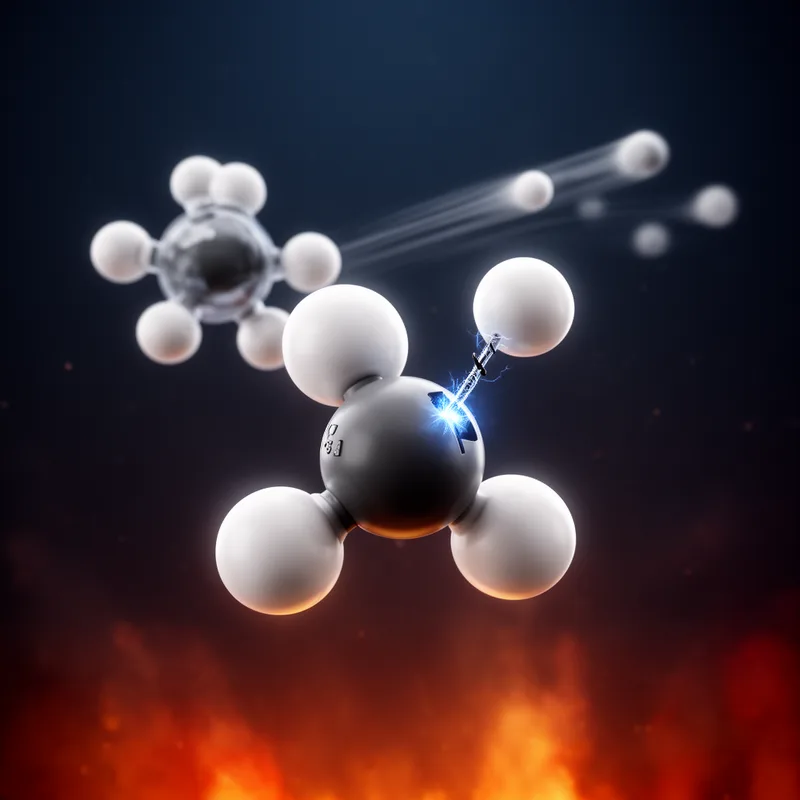
methyl radical
- noun
- /ˈmɛθəl ˈrædɪkəl/
- Specialized
- In organic chemistry, the methyl radical plays a crucial role as a reactive intermediate.
Examples
-
A methyl radical is often formed during the combustion of hydrocarbons.
-
The scientist used a methyl radical in the experiment to observe its reactivity.
-
The next step in the reaction path should be the reaction of the methyl radical with the complex, which is found to occur via TS XIII.
Academic text (2001)
Synonyms

 9
7.7
9
7.7

A small chemical part made of one carbon and three hydrogen atoms attached to other molecules
Surface Forms
Morphology
The term is transparently compositional: 'methyl' denotes the CH3 chemical group and 'radical' denotes a reactive species with an unpaired electron, so together they refer to a radical species derived from a methyl group. Although technical, this noun–noun formation follows standard compositional chemistry naming (and similar constructions exist in many languages), so a learner who knows both constituents can infer the intended meaning.
Etymology
Methyl radical comes from a simple chemistry picture. Methyl is the small group left when a gas called methane loses one hydrogen, and radical used to mean a single, very active piece. So a methyl radical is a tiny, highly 'reactive' group that quickly joins other molecules.