
mesoblast
- noun
- /ˈmɛzəˌblæst/
- Specialized
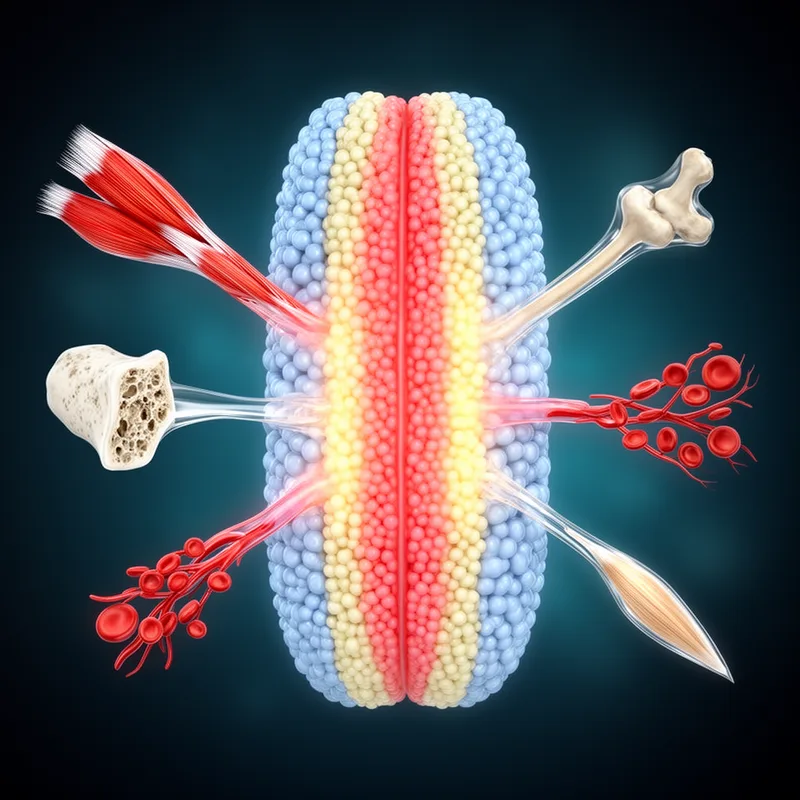
- During embryonic development, the mesoblast forms many of the body's vital tissues.
Examples
-
During gastrulation, the mesoblast forms between the ectoderm and endoderm.
-
Researchers studied how cells in the mesoblast differentiate into specific organ systems.
-
Abnormalities in the mesoblast can lead to congenital defects affecting muscles and bones.
-
The mesoblast is crucial in embryonic development.
-
Abnormalities in the mesoblast can lead to congenital defects affecting muscles and bones.
-
During embryonic development, the mesoblast forms many of the body's vital tissues.
-
Researchers studied how cells in the mesoblast differentiate into specific organ systems.
Synonyms


 1
9.8
The middle layer in a developing animal that becomes muscles, bones, and blood
Surface Forms
Morphology
mesoblast = blast (opaque) = meso + blast
The prefix 'meso-' and the combining form '-blast' are specialized biomedical morphemes not familiar to average learners, so the meaning cannot be reliably inferred.
Etymology
The word mesoblast comes from Greek roots meso- 'middle' and -blast 'sprout' or 'young cell'. So a mesoblast is the middle layer of young cells in an embryo that will grow into muscles, bones and other tissues.