
meiotic
 1
9.5

- adjective
- /maɪˈɒtɪk/
- Specialized
- The most mature spermatogenic cell type present is the early spermatocyte, indicating an early meiotic arrest of spermatogenesis.
- meiotic arrest
- early meiotic
Examples
-
This study advances our clinical understanding of the molecular basis of early meiotic arrest as a cause of non-obstructive azoospermia.
Academic text (2003) -
A null mutation of Sycp3 in mice causes azoospermia with meiotic arrest.
Academic text (2003) -
And the response to that is that all the other genes wanted to 'cause these meiotic drivers to go away.
-
You can suppress the meiotic drive so you can punish the offenders.
-
Interpretation: We suggest that SYCP3 has an essential meiotic function in human spermatogenesis that is compromised by the mutant protein via dominant negative interference.
Academic text (2003) -
Another study of an accidental exposure of a female mouse control group to BPA from damaged polycarbonate cages showed that the exposure can result in meiotic abnormalities.
Blog text (25) -
By contrast, examination of testis biopsy samples from the patients with the 643delA mutation showed a profoundly abnormal spermatogenic process due to complete early meiotic arrest.
Academic text (2003) -
No variants or single-nucleotide deletions were observed in the nucleotide sequences of the other meiotic-arrest patients or in the 75 pregnancy-proven fertile control individuals (p=0.039).
Academic text (2003) -
We identified the human SYCP3 gene on chromosome 12 and screened azoospermic men presenting with meiotic arrest and normal, pregnancy-proven fertile controls for mutations in SYCP3.
Academic text (2003) -
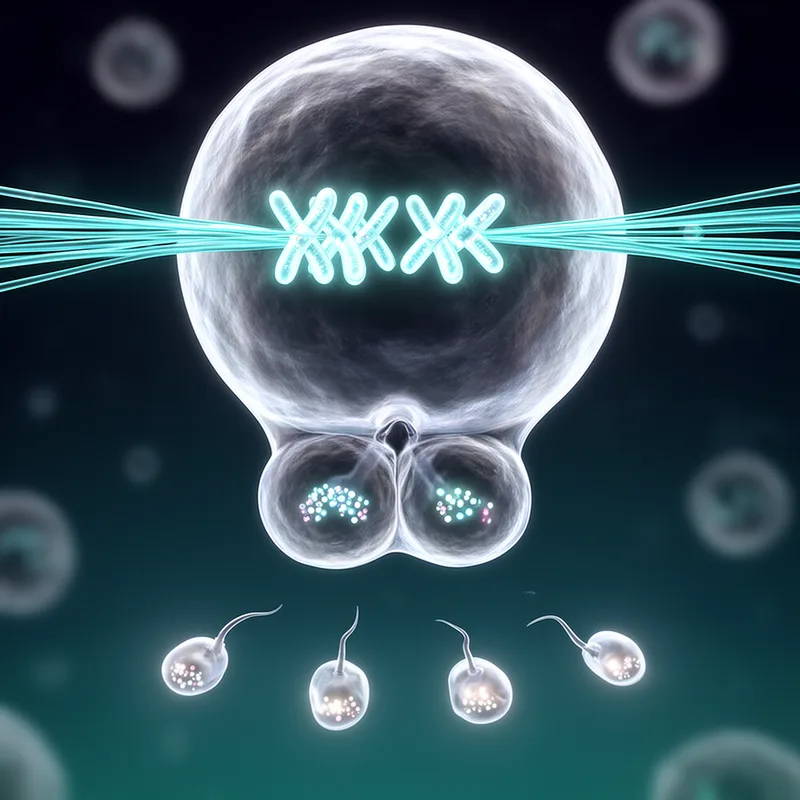
The process of meiotic division results in the formation of gametes, which are essential for sexual reproduction.
Surface Forms
Morphology
Etymology
Meiotic comes from the Greek word meiosis and the root meio- meaning 'lessen' or 'make smaller'. So meiotic describes the special cell division that makes sex cells like sperm and eggs with 'less' genetic material, half the usual number of chromosomes.