

megatherian mammal
- noun
- /ˌmɛɡəˈθɪəriən ˈmæməl/
- Specialized
- The fossilized remains of a megatherian mammal were discovered in the Patagonian region.
Examples
-
Scientists believe the megatherian mammal became extinct around 10,000 years ago.
-
Many megatherian mammals roamed South America during the Ice Age, feeding mainly on leaves.
-
The megatherian mammal roamed the forests of South America.
-
Did you know that the megatherian mammals lived during the Pleistocene epoch?
-
Many megatherian mammals roamed South America during the Ice Age, feeding mainly on leaves.
-
The fossilized remains of a megatherian mammal were discovered in the Patagonian region.
-
Scientists believe the megatherian mammal became extinct around 10,000 years ago.
Synonyms

 1
9.6
1
9.6

A very large extinct mammal with long claws that lived on land in the Americas long ago


 1
9.9
1
9.9
A very large extinct ground sloth from South America that lived long ago

A very large extinct ground sloth that lived in South America long ago

A very large ground sloth that lived in South and Central America and is now extinct
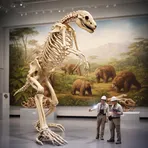
A very large extinct animal like a ground sloth that lived in ancient America
Surface Forms
Morphology
The phrase is a straightforward noun phrase combining a taxonomic descriptor 'megatherian' (extinct ground sloth) with the noun 'mammal', so a learner who knows both constituents will infer it denotes a mammal of the megatherian group. The meaning is fully compositional and follows normal English noun-modifier patterns, making it predictable despite the technical vocabulary.
Etymology
Megatherian mammal takes its name from the Greek parts mega 'big' and therion 'beast', which gives the image of a very large animal. These were giant ground sloths that lived in South America during the Ice Age, so the phrase refers to a very large extinct mammal.