
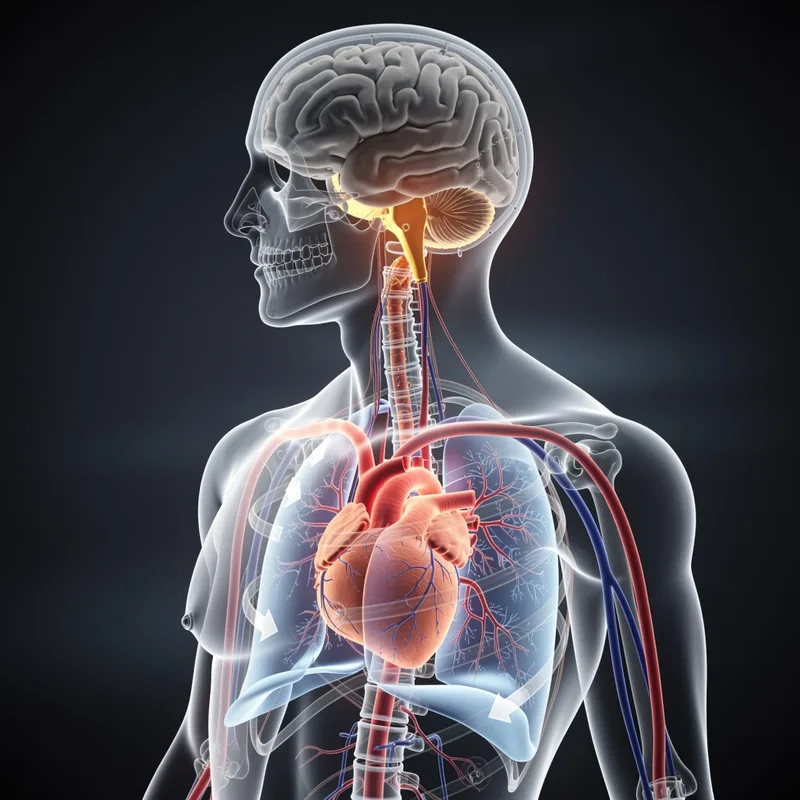
medulla oblongata
 2
6.9
2
6.9

- noun
- /məˈdʌlə ˌɑːblɒŋˈɡɑːtə/
- Specialized
- Alligators are aggressive because of an enlarged medulla oblongata.
Examples
-
And by the way, Mama, alligators are ornery because of their medulla oblongata!
-
Somethin' wrong with his medulla oblongata.
-
It's moving through the medulla oblongata, killing off his senses, touch, smell.
-
The one part of his brain that has escaped damage is the medulla oblongata.
-
The brain is severely traumatized and appears to have been severed at the medulla oblongata.
-
It was a trick of the emotions, I know, some enzyme built up in the medulla oblongata from an excess.
Fiction book (1994) -
They penetrated to the medulla oblongata, where the spinal cord meets the brain.
-
In both, moreover, the thalamus and the medulla oblongata can be seen to usurp the function of the neocortex.
Fiction book (1996) -
The medulla oblongata controls vital functions like breathing and heart rate.
-
Damage to the medulla oblongata can lead to life-threatening respiratory issues.
Synonyms
 4
8.4
4
8.4
The lower part of the brainstem that controls breathing and heartbeat
Surface Forms
Morphology
medulla + oblongata
This is a technical Latin anatomical name: 'medulla' gives a partial clue (a central or lower brainstem region), while 'oblongata' is not a common English word (it derives from 'oblong' but a B1 learner would not reliably map it to shape/position). The specific functional meaning (controls breathing, heart rate, etc.) cannot be derived from the constituents by an average B1 learner, so the phrase is only partially transparent.
Etymology
Medulla oblongata comes from Latin and literally means a long, marrow-like core: medulla = 'marrow' and oblongata = 'elongated'. Picture a long piece of marrow running from the brain into the spine; that image helps you remember it is the low part of the brain that connects to the spinal cord and controls breathing and the heart.