
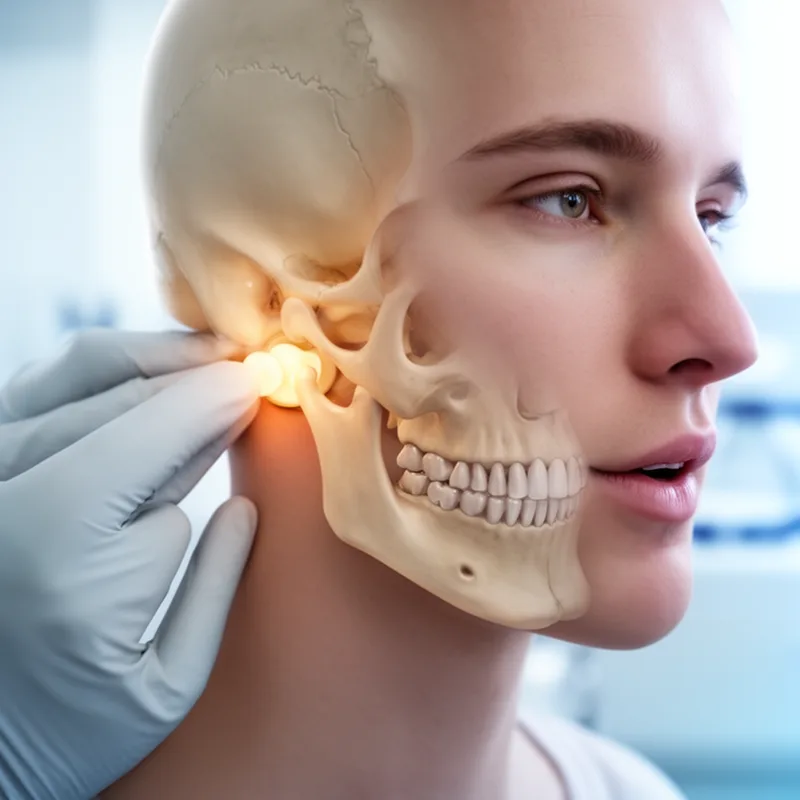
mandibular joint
- noun
- /mænˈdɪbjələr dʒɔɪnt/
- Specialized
- The dentist explained that the mandibular joint is crucial for proper jaw movement.
Examples
-
In view of the size of the tumor and the involvement of bone, muscle, connective tissue, the mandibular joint, the dura mater, and the brain, postoperative radiation was recommended by the Department of Radiation Therapy, but the patient declined.
Academic text (2003) -
Now, the optimum placement site... ...is the temporal mandibular joint.
-
Patients with issues in the mandibular joint often experience difficulty while chewing.
-
During the examination, the doctor noted inflammation in the patient's mandibular joint.
Synonyms

 1
5.5
1
5.5

A joint that connects the lower jaw to the skull and lets the jaw open and close

The joint that connects the lower jaw to the skull near the ear
Surface Forms
Morphology
The meaning is directly compositional: 'mandibular' refers to the lower jaw and 'joint' denotes a bone articulation, so together they denote the joint of the lower jaw (the temporomandibular joint). This follows standard anatomical naming patterns (cross-linguistically common), so a learner who knows both constituents can infer the MWE's meaning.
Etymology
Mandibular joint names the joint that links the lower jaw to the skull. The word mandibular comes from 'mandible', meaning the lower 'jaw', and joint is the place where two bones meet, so this connection lets the jaw move to 'chew' and 'speak' and explains why problems there cause 'pain' and trouble moving the jaw.