
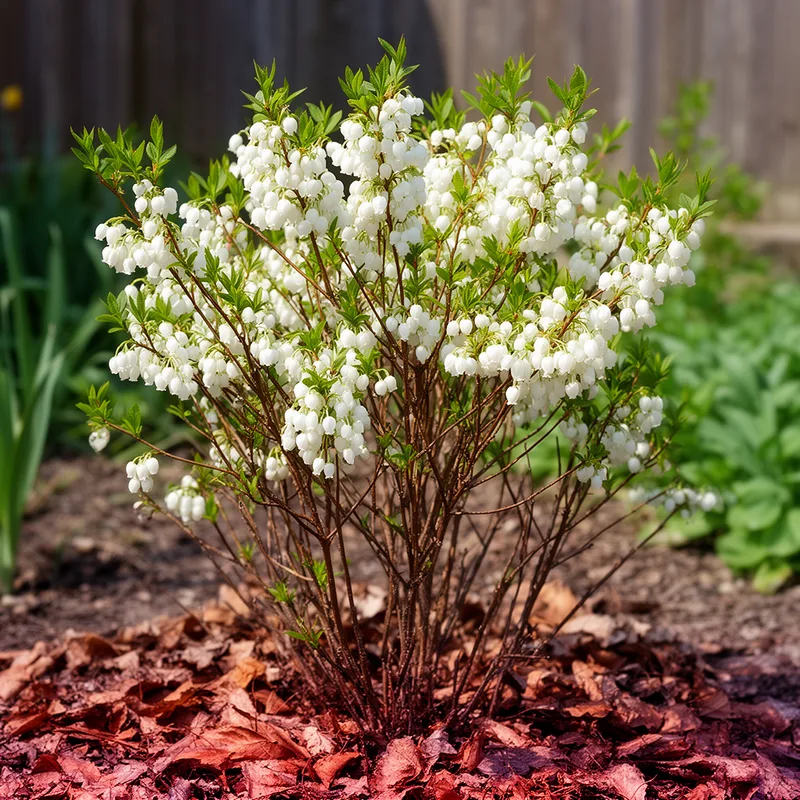
male berry
- noun
- The male berry blooms in early summer, adding bright spots of white to the garden.
Examples
-
I planted a male berry in the corner of my yard to attract pollinators.
-
Researchers studied the medicinal properties of male berry leaves in traditional remedies.
-
The male berry shrub blooms in early spring.
-
Many gardeners appreciate the male berries for their beauty.
-
I planted a male berry in my garden to enjoy its beautiful white flowers in spring.
-
The male berry shrub is known for attracting butterflies with its fragrant blossoms.
-
In early summer, the male berry fills the air with its sweet scent from the numerous flowers.
Synonyms

A bush with many branches that loses its leaves each year and has small white bell-shaped flowers

A bush with many branches that loses its leaves and has small white flowers in clusters
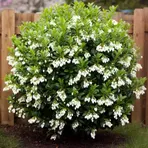
A bush with many branches and groups of small white bell-shaped flowers

A shrub that loses its leaves and has dense clusters of small white bell-shaped flowers
Surface Forms
Morphology
The compound 'male berry' transparently signals a type of berry or berry-producing plant, so a B1 learner who knows 'male' and 'berry' would likely infer it refers to a plant or fruit. However, the specific botanical sense (a deciduous, much-branched shrub with dense, downy clusters of small bell-shaped flowers) and why 'male' is used are not predictable from the constituents alone, so the meaning is only partially inferable without prior exposure.
Etymology
Male berry may come from old gardeners who used the parts male and berry to picture a sturdy bush covered in many small, white, bell-shaped flowers and tiny 'berries'. So male berry today refers to a bushy shrub with dense clusters of small flowers and fruit.

