
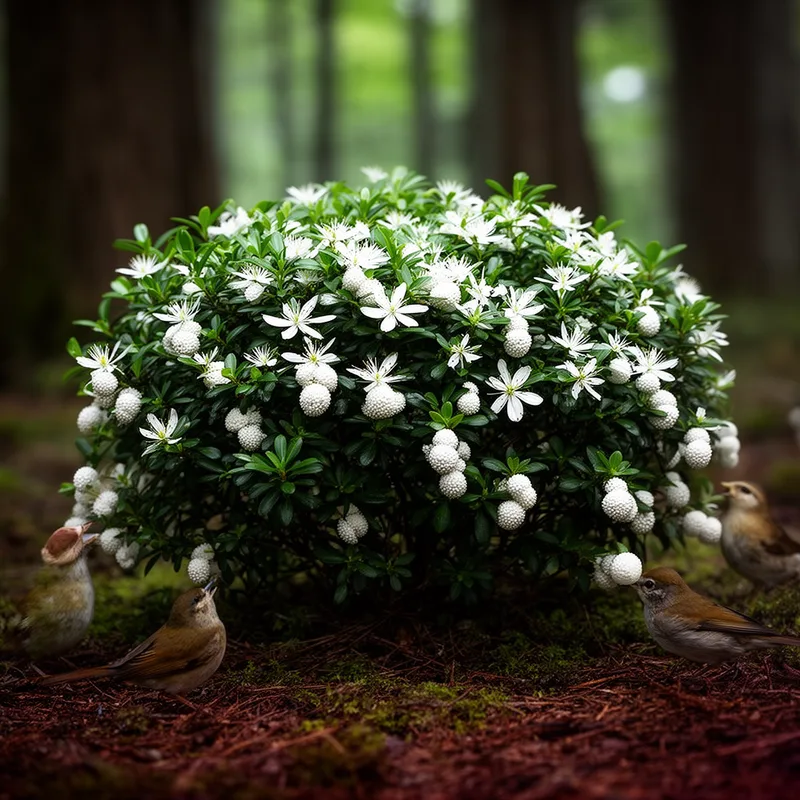
maidenhair berry
- noun
- /ˈmeɪdənˌhɛr ˈbɛri/
- US
- The maidenhair berry produces small white flowers that bloom in the spring.
Examples
-
Despite their rough seeds, maidenhair berries attract many birds in the summer.
-
The maidenhair berry is often found in shaded forest areas of northern Japan.
-
Gardeners admire the delicate appearance of the maidenhair berry throughout the year.
-
The maidenhair berry thrives in shady areas.
-
Have you ever seen a maidenhair berry plant?
-
In the wild, the maidenhair berry is known for its hairy seeds that help it survive harsh conditions.
-
Many hikers enjoy spotting the maidenhair berry along the forest trails in northern North America.
Synonyms

A low bush that spreads on the ground with small white flowers and white berries
Low evergreen shrub that grows close to the ground with small white berries

A low evergreen shrub that grows in cool northern places and has small white flowers and soft white seeds
Surface Forms
Morphology
This is a straightforward noun+noun compound where 'maidenhair' names a plant and 'berry' denotes its fruit, so the phrase denotes the berry (or berry-producing plant) associated with the maidenhair plant. Botanical compound names follow common compositional patterns across languages, so a B1 learner who knows both constituents can infer the general meaning even if they lack specific botanical details.
Etymology
Maidenhair berry may come from the plant's delicate look: its tiny white, rough seeds and thin leaves reminded people of the soft maidenhair fern or a young woman's fine hair, so they named the small berry after that image.

