

creeping snowberry
- noun
- /ˈkripɪŋ ˈnoʊˌbɛri/
- Specialized
- In the shaded areas of the forest, creeping snowberry flourishes, producing delicate white flowers each spring.
Examples
-
After a long winter, the creeping snowberry began to bloom, signaling the arrival of warmer weather.
-
The gardener added creeping snowberry to his collection of native shrubs to attract local wildlife.
-
Wildflowers such as goldthread, creeping snowberry, and large-leaved goldenrod, among others, grow in these forests, along with many other species from the lower elevations.
Academic text (1998)
Synonyms
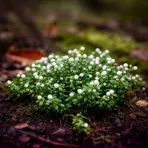
Low evergreen shrub that grows close to the ground with small white berries

A low evergreen bush that grows close to the ground with white flowers and rough white seeds

A low evergreen shrub that grows in cool northern places and has small white flowers and soft white seeds
Surface Forms
Morphology
The noun phrase is fully compositional: 'creeping' (gradually spreading/low-growing) describes the manner of growth of 'snowberry' (a shrub), so the meaning ‘a low-growing/spreading snowberry shrub’ is directly inferable. This adjective + noun descriptive pattern is common and follows regular English composition, making it transparent to a B1 learner who knows the constituents.
Etymology
Creeping snowberry gets its name from the plant's look and way of growing: it 'creeps' along the ground as a low shrub, and its small white berries look like bits of 'snow', so the name describes the low plant with white berries we know today.

