
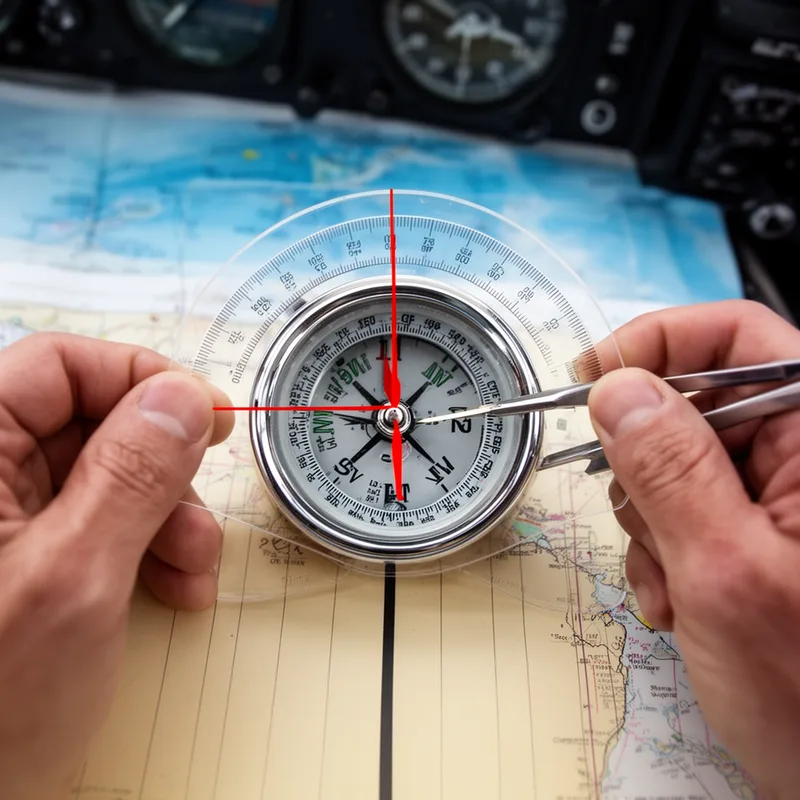
magnetic variation


 1
6.8
1
6.8
- noun
- /mæɡˈnɛtɪk ˌvɛəˈreɪʃən/
- Specialized
- So what we want to do is detect just the tiniest amount of of magnetic variation within that coil.
Examples
-
The magnetic variation can change significantly from one location to another, affecting navigational accuracy.
-
Navigators must account for magnetic variation when using a compass to ensure accurate directions.
-
Some of the magnetic variations up here are as much as 40 degrees.
-
This is known as magnetic variation or declination, and it varies by location.
Academic text (2012) -
Third, a marked correlation between places of magnetic variation associated with geological faulting and the placing of stone circles has been noticed.
Academic text (1990) -
In the six books of his masterpiece, Gilbert covered the origins of the movement of magnets, the direction taken up by them, the earth's magnetic variation, the dip of magnetic needles, and the earth as a great lodestone.
Academic text (1991) -
In cartography, understanding magnetic variation helps in creating precise maps for travelers.
Synonyms
 3
7.4
3
7.4
The angle between magnetic north and true north used in navigation

The angle between the direction a compass points and true north at a place
Surface Forms
Morphology
The constituents 'magnetic' and 'variation' signal a difference or change related to magnetism, so a B1 learner who knows those words would likely infer a general sense of a magnetic-related difference. However the precise technical meaning (the specific angle between magnetic north and true north used in navigation) is specialized and not fully predictable from the parts alone, making it only partially transparent.
Etymology
Magnetic variation comes from a simple picture: a compass points to magnetic north while maps and charts show 'true north'. The variation is the difference in direction between 'magnetic' north and 'true' north, and sailors and pilots use that difference to correct their course, so magnetic variation today means that angle used in navigation.