
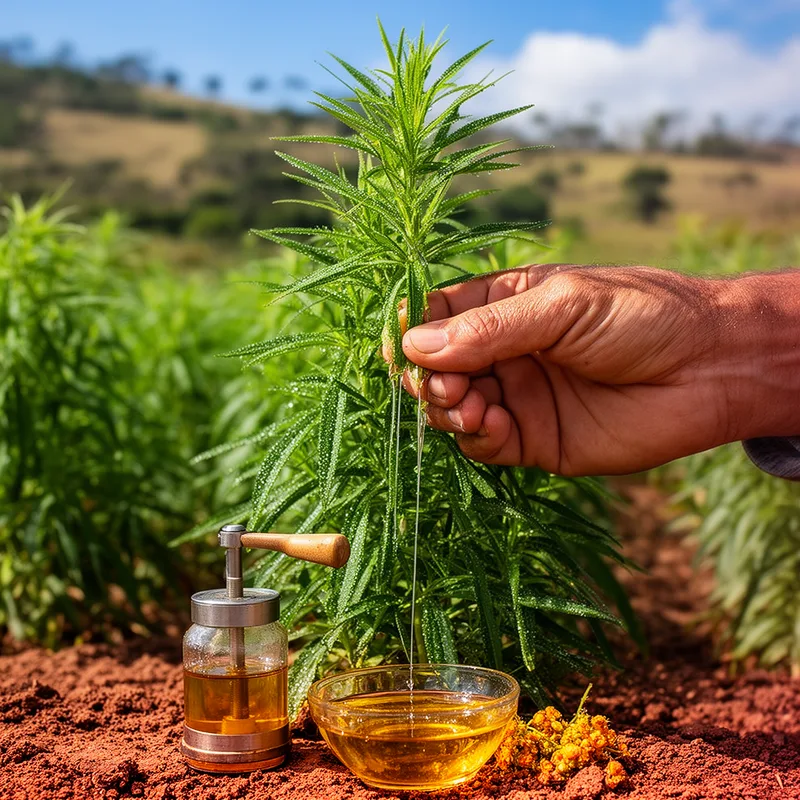
madia oil plant
- noun
- Specialized
- The sticky leaves of the madia oil plant help protect it from herbivores.
Examples
-
Farmers in Brazil cultivate the madia oil plant for its oil.
-
The madia oil plant is native to South America.
-
Farmers in the region have begun cultivating madia oil plant for industrial purposes.
-
The madia oil plant is valued for the quality of its extracted oil.
-
Farmers in Brazil cultivate the madia oil plant because it produces high-quality madia oil.
-
The madia oil plant is known for its sticky leaves and is primarily grown for its oil extraction.
-
In the Amazon rainforest, the madia oil plant thrives and is harvested for its valuable oil.
Synonyms

A South American herb with sticky leaves grown for its oil-rich seeds

A South American herb with sticky leaves grown for oil
A South American plant with sticky leaves used to make oil and medicine
Surface Forms
Morphology
The meaning is directly compositional: 'Madia' (the genus), 'oil' (a substance) and 'plant' (an organism) combine to indicate a plant that yields madia oil. This follows a regular English noun-compound pattern (genus/substance + plant) and would be understandable to a B1 learner who knows the constituent words.
Etymology
Madia oil plant may come from the plant name madia plus the word oil, because people pressed its sticky leaves to get 'oil'. So today the phrase means a South American herb grown for its oil.

